Lab news
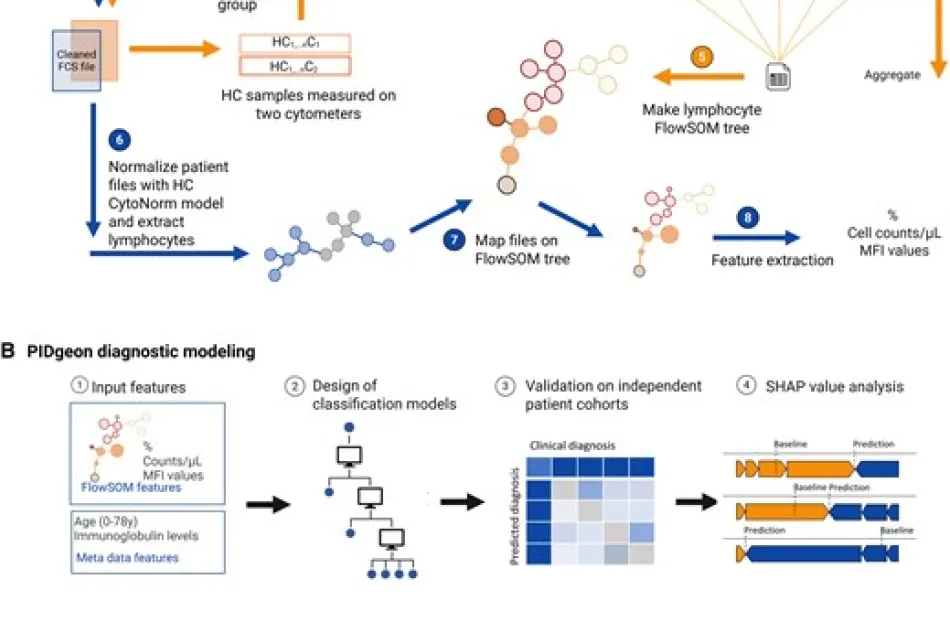
New paper: PIDgeon
We introduce PIDgeon, an AI-powered, fully automated pipeline for diagnosis of primary immunodeficiencies (PID) 🕊️
PIDgeon delivers
▶ correlation scores above 0.90 for the major lymphocyte subsets
▶ high sensitivity (93% to 100%) in predicting PID with severe T cell defects
▶ low false-negative rates (1.5% to 5.4%)
▶ interpretable patient reports
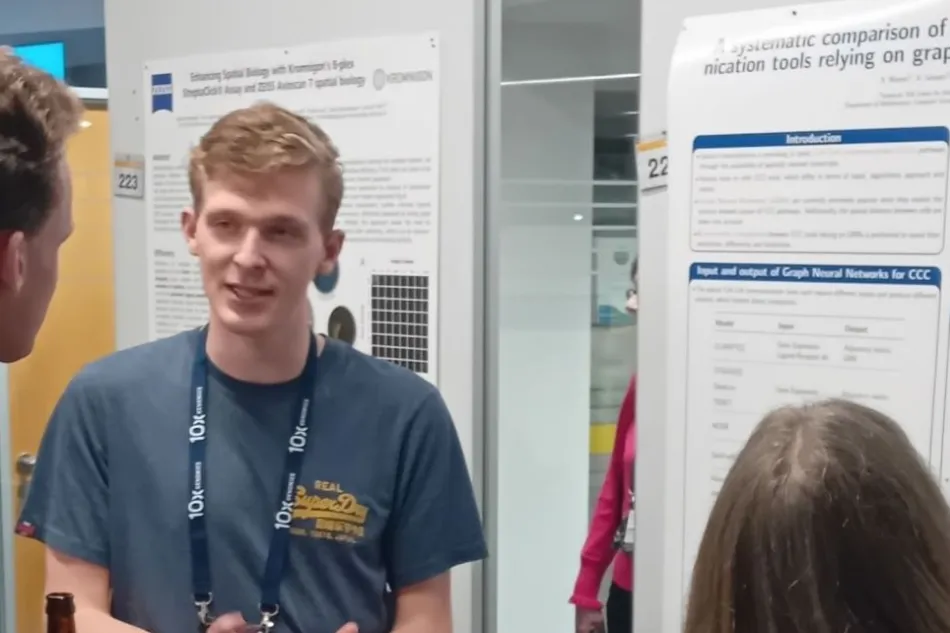
Karen and Xander at ESSB 2025
Last week, we joined the hashtagEMBL hashtagESSB2025 conference, Spatial Biology: The Melting Pot, where Karen and Xander had the wonderful opportunity to present their posters on the struggles researchers can face when using VisiumHD data, and the booming field of GNNs in spatial biology. We got to know many interesting people, and are looking forward to future editions!
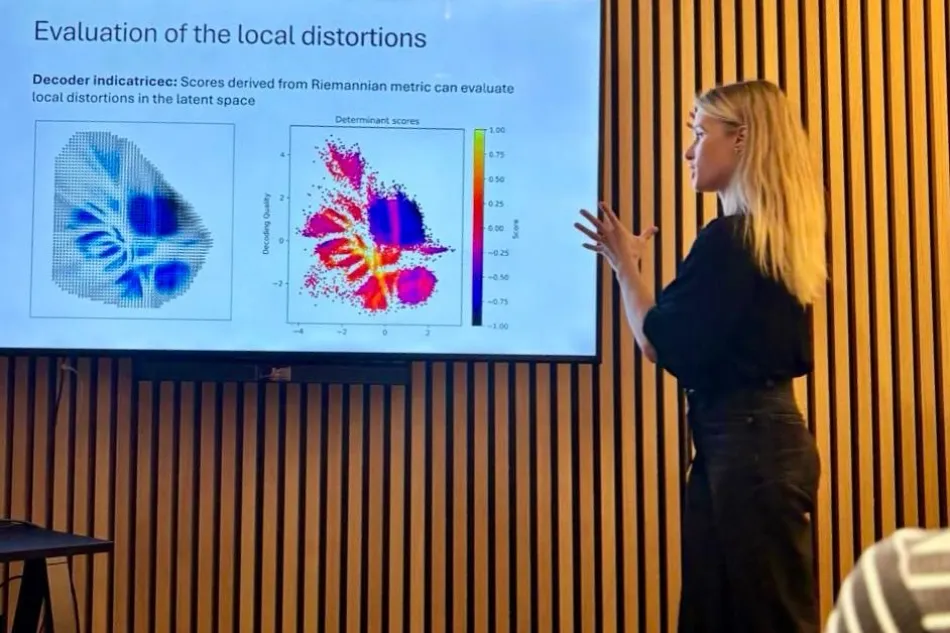
Flanders AI Research Day
Last week, our research group had the pleasure of participating in the Flanders AI Research Day in Ghent. It was a great opportunity to present our latest work, and discuss emerging trends in AI and machine learning, with presentations by Ruth, Laura, Yentl and Sabrina.
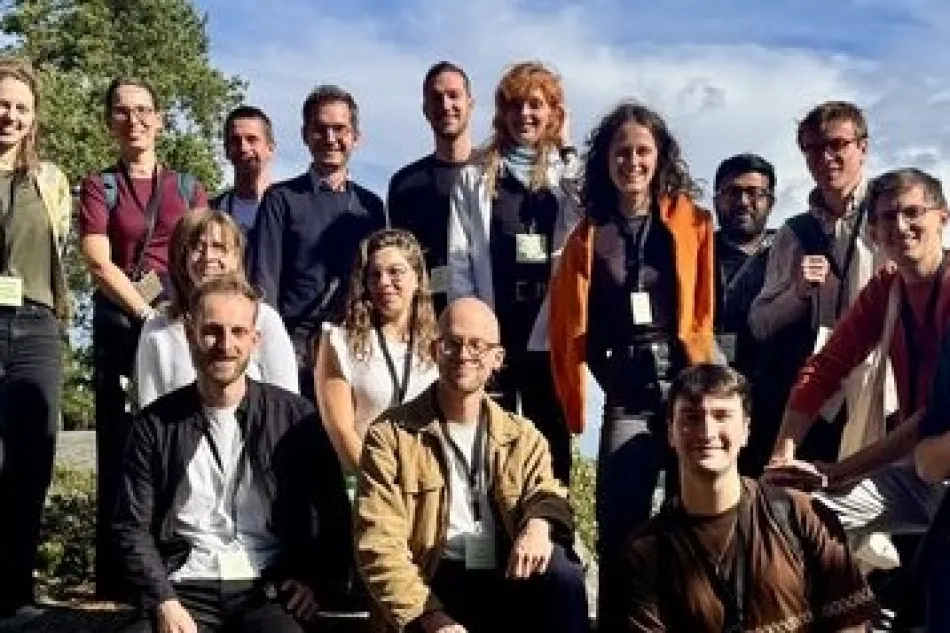
Ruth at SCG 2025
Great to (re)connect with so many VIB.AI researchers at hashtagSCG2025!
Ruth brought back lots of interesting takeaways - always inspiring to learn from the latest research and ideas in the field 💡
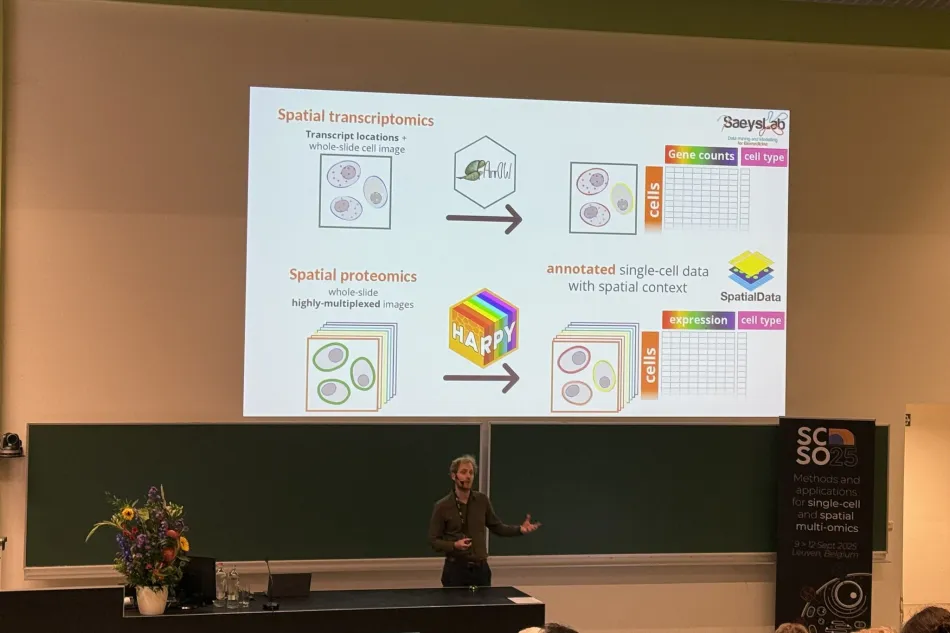
Karen and Arne at SCSO 2025
Our very own Karen Herreman and Arne Gevaert were also present last week at shtagSCSO in Leuven! Karen presented her poster on single-cell resolution analysis of hashtagVisiumHD data, whereas Arne presented our lab's work on spatial transcriptomics (SPArrOW) and proteomics (Harpy), courtesy of Lotte Pollaris and Benjamin Rombaut.
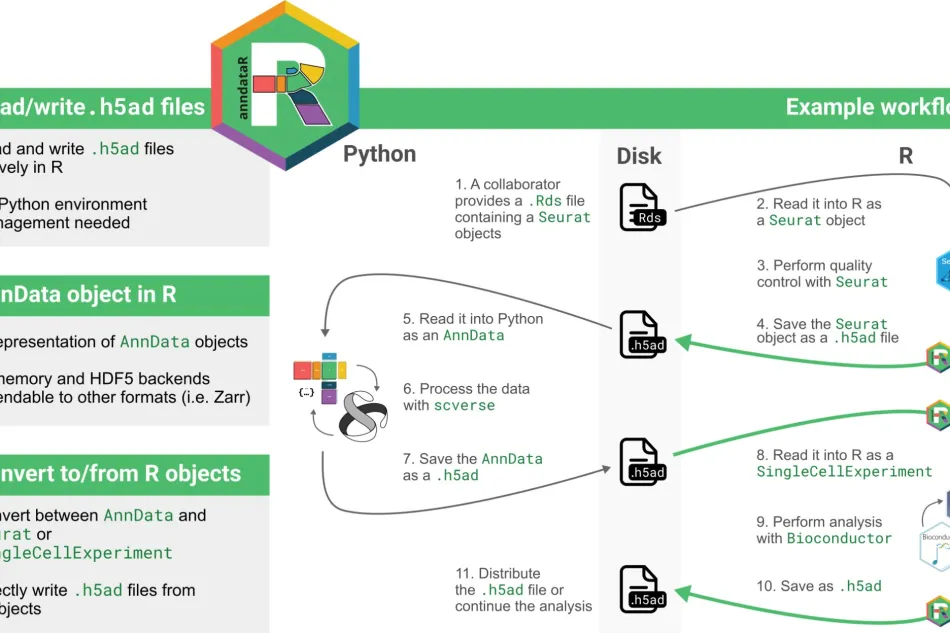
New preprint: anndataR
We're excited to share that our preprint on anndataR, a new package bringing Python's AnnData to R, is now available on bioRxiv 🎉
anndataR makes it possible to:
- Read and write H5AD files natively in R
- Convert between AnnData, SingleCellExperiment and Seurat
- Work directly with AnnData objects in R
If you've ever struggled with reading H5AD files in R, or converting between single cell formats, you should try out anndataR!
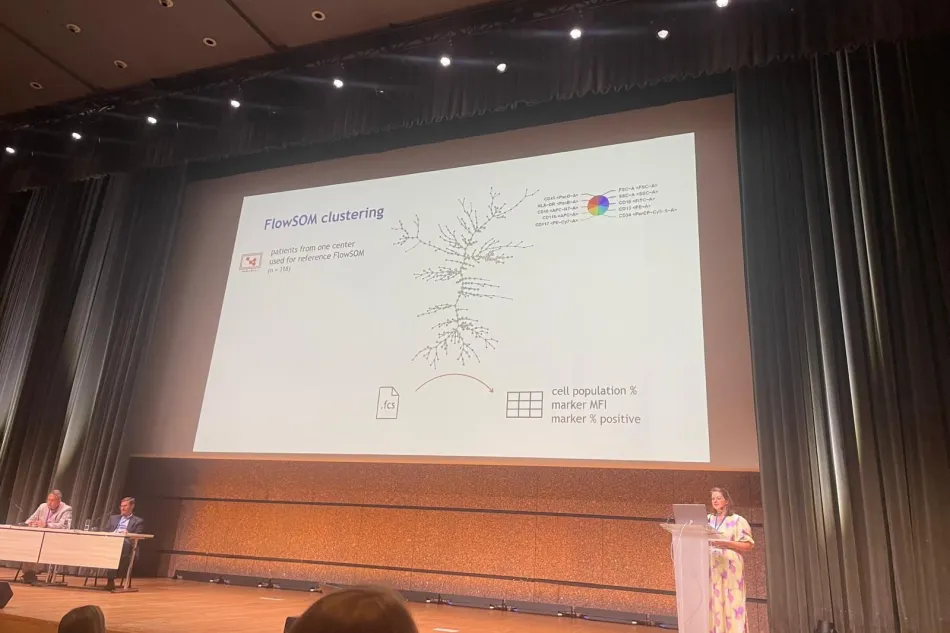
Katrien and Sarah at ESCCA
Meanwhile, Katrien Quintelier and Sarah Bonte are at ESCCA in Montpellier ☀️🌴🦩
Together with Serena Di Cecilia, PhD they hosted a pre-conference workshop on "Advanced computational data analysis", teaching clinical researchers the basic principles of data preprocessing, dimensionality reduction and clustering 💻
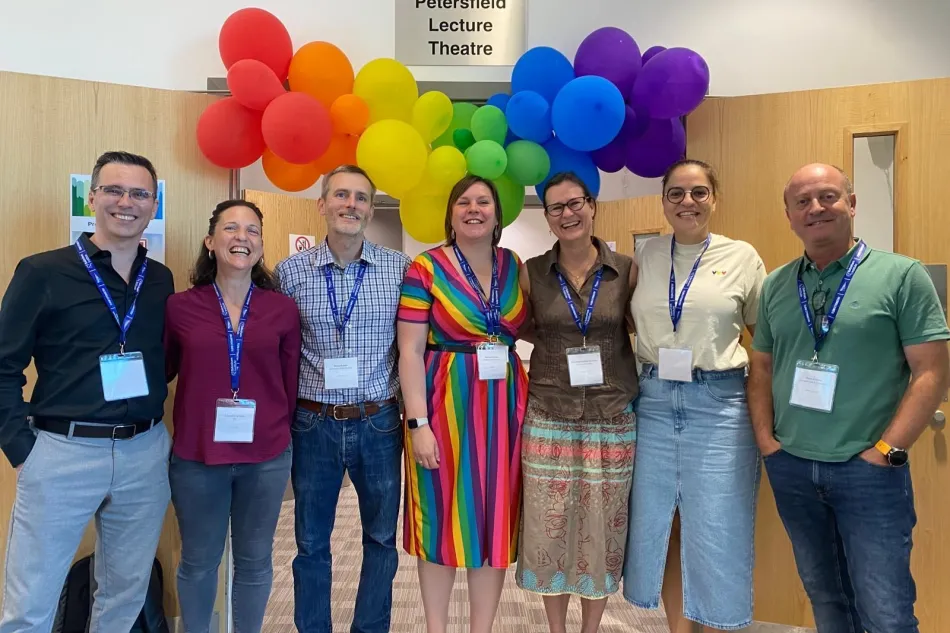
Katrien at Babraham Institute
Katrien was invited to give a talk and run a workshop on high-dimensional data analysis during the Spectral Flow Cytometry Symposium at The Babraham Institute.
🌈 It were two colorful days full of Skittles, Muppets, and inspiring talks and workshops by Rachael Walker, Charlotte Christie Petersen, Rui Gardner, Laura Ferrer Font, Òscar Fornas, and Oliver Burton.
Thank you to Rachael, Derek and the whole team for the wonderful organization — it’s been a blast!
Introducing CytoBytes
Introducing CytoBytes: bite-sized cytometry tutorials! 🔥
We're excited to announce the launch of CytoBytes, a new YouTube channel dedicated to short, focused tutorials on cytometry data analysis. Created by a group of cytometry-loving nerds (including members of our team), and supported by the International Society for Advancement of Cytometry, CytoBytes covers tools, techniques and best practices.
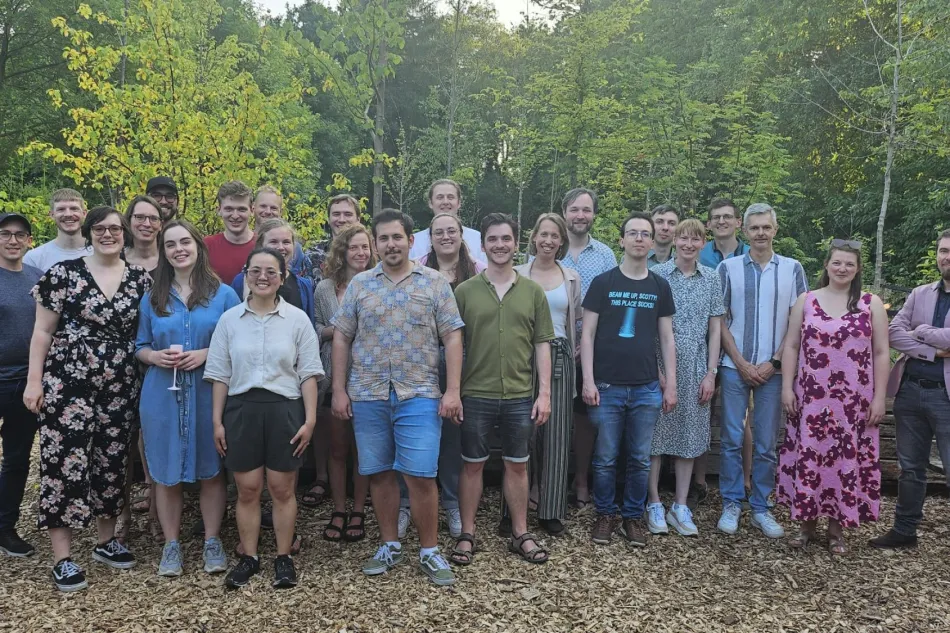
Celebrating 10 years of SaeysLab
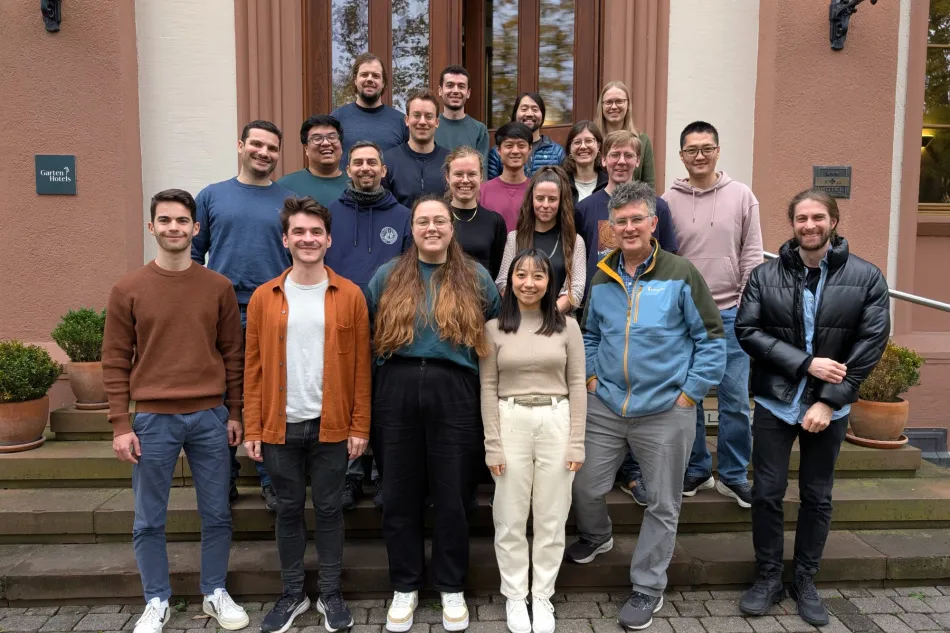
Last week, we came together to mark a special milestone: 10 years of SaeysLab - a decade of scientific curiosity, collaborations, and fun.
From groundbreaking research to lasting friendships, this journey has been driven by the passion and dedication of every lab member past and present. Our recent celebration was a moment to reflect on how far we've come, and to look forward to the discoveries and innovations still ahead.
A huge thank you to everyone who has contributed to making SaeysLab what it is today. Here's to the next chapter! 🥂
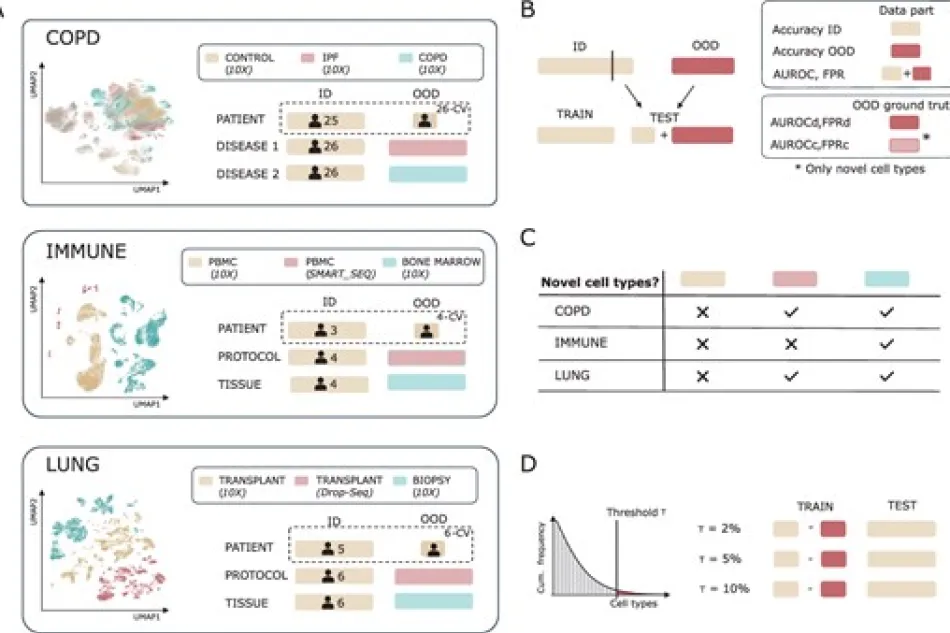
Paper: out-of-distribution detection in single-cell transcriptomics
A common data science assumption is that all samples follow the same distribution (iid). However, in single-cell transcriptomics data this is hardly the case when comparing different samples. We here present the first study comparing out-of-distribution detection methods for the single-cell transcriptomics field. Great work by Lauren Theunissen in collaboration with Willem Waegeman and Thomas Mortier!
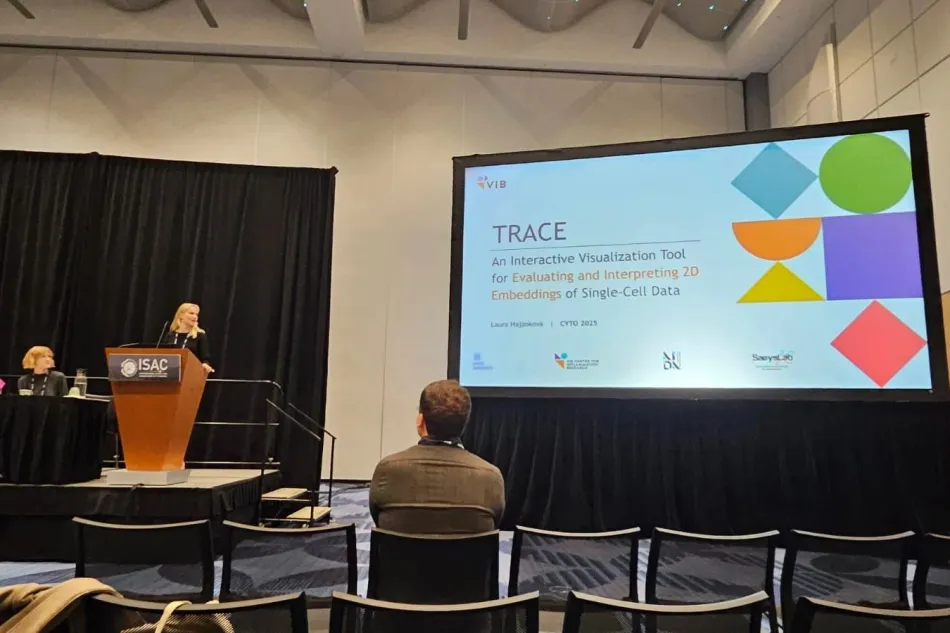
Saeyslab @ CYTO 2025
We had an amazing time at CYTO 2025! Presented our work (thanks to Sarah, Sofie, Luca, Katrien, Annelies and Laura), chaired sessions, learned about what's hot and happening in the cytometry field and had lots of interesting chats (and maybe also partied a tiny little bit) 💃
Hope to see/hear you all again soon!
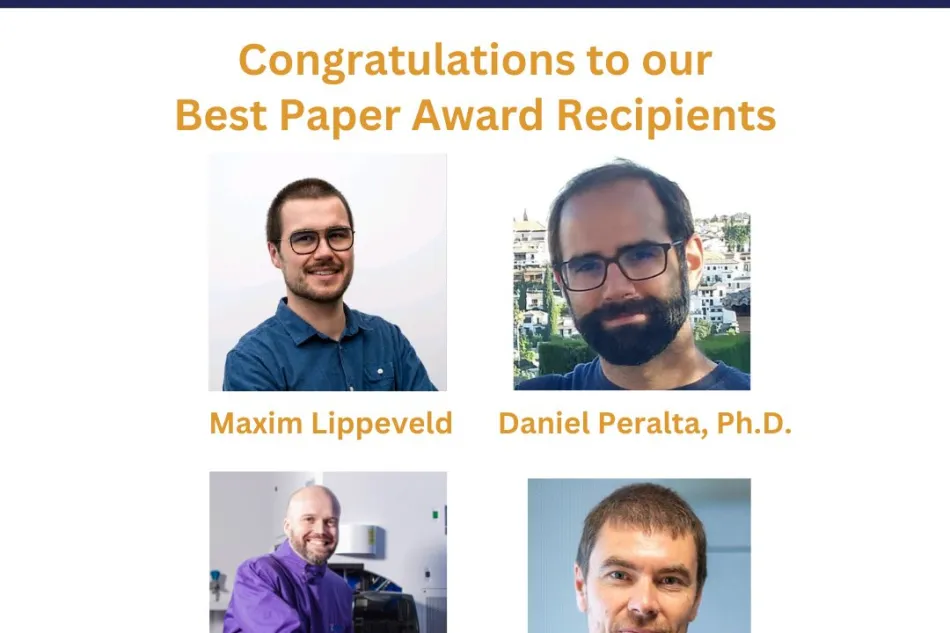
SCIP receives Best Paper Award from ISAC
To quote the International Society for Advancement of Cytometry: The SCIP paper stood out for its scientific rigor, technical innovation, and real-world relevance — delivering a powerful, open-source tool that advances single-cell analysis. Congratulations to Maxim Lippeveld, Daniel Peralta, Andrew Filby & Yvan Saeys!
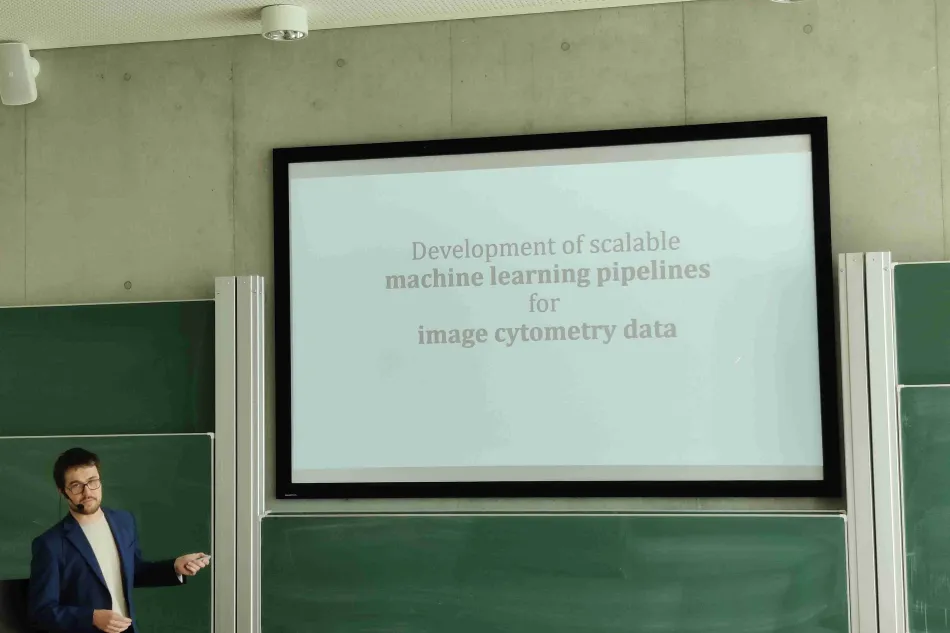
dr. Lippeveld
Another Saeyslab PhD student graduated!
Maxim defended his PhD thesis on scalable ML pipelines for image cytometry data, and passed with flying colours.
Congratulations dr. Lippeveld!
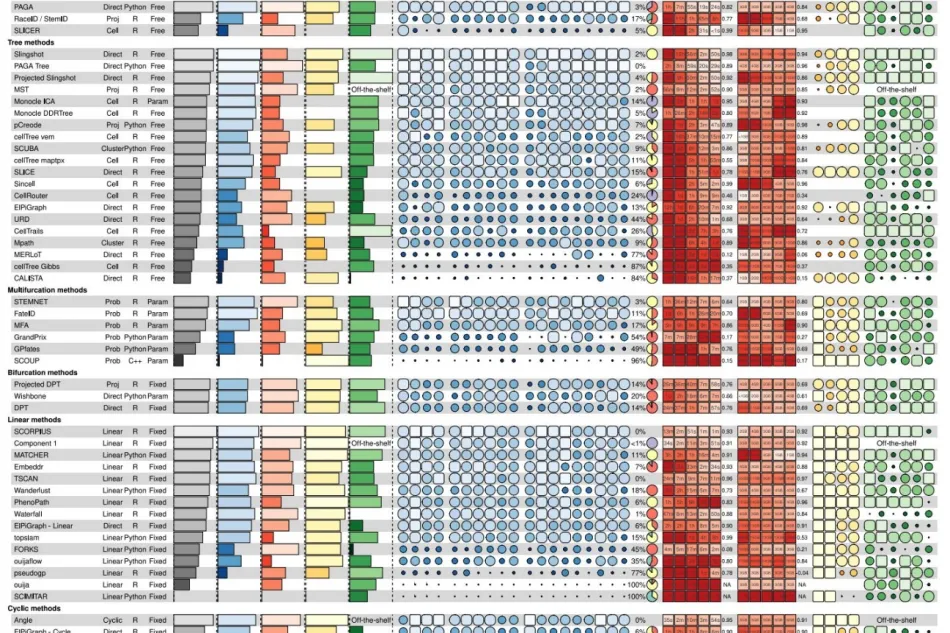
Funkyheatmap paper in The Journal of Open Source Software
Data shouldn’t be boring! FunkyHeatmaps lets you visualize mixed-type datasets in an easy and comprehensive way. Plus, the name itself makes you wanna dance! It’s available on not one but three platforms: Python, JavaScript, and R. A great collaborative effort of Artuur Couckuyt, Louise Deconinck, Robrecht Cannoodt, and all other co-authors.
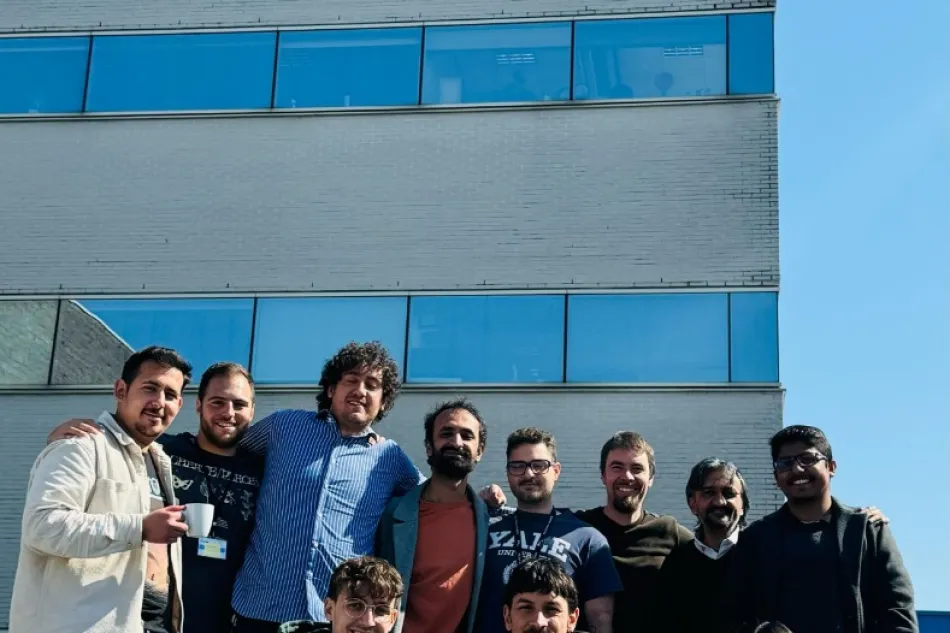
SIGNATURE Workshop
The doctoral candidates of the SIGNATURE network were invited to our center for an intensive one-week machine learning workshop. This workshop provided a comprehensive introduction to machine learning, neural networks and artificial intelligence, explaining the theoretical aspects as well as giving training on how to deal with practical use cases in this field.
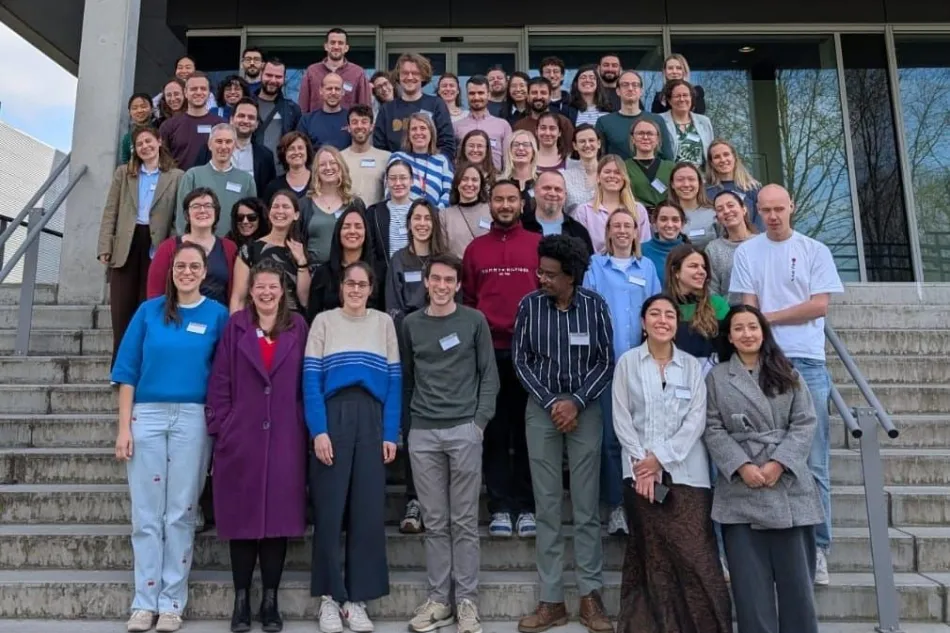
Computational Cytometry Summer School
For the second edition of the Computational Cytometry “Summer” School, we welcomed 48 participants from 16 countries. This picture is proof that you can spend 5 days doing computational cytometry in R and still come out smiling! From read.FCS to FlowSOM, this group powered through every line of code with the enthusiasm of a data scientist on their third cup of coffee. Shoutout to all laptops (and brains) for not catching fire!
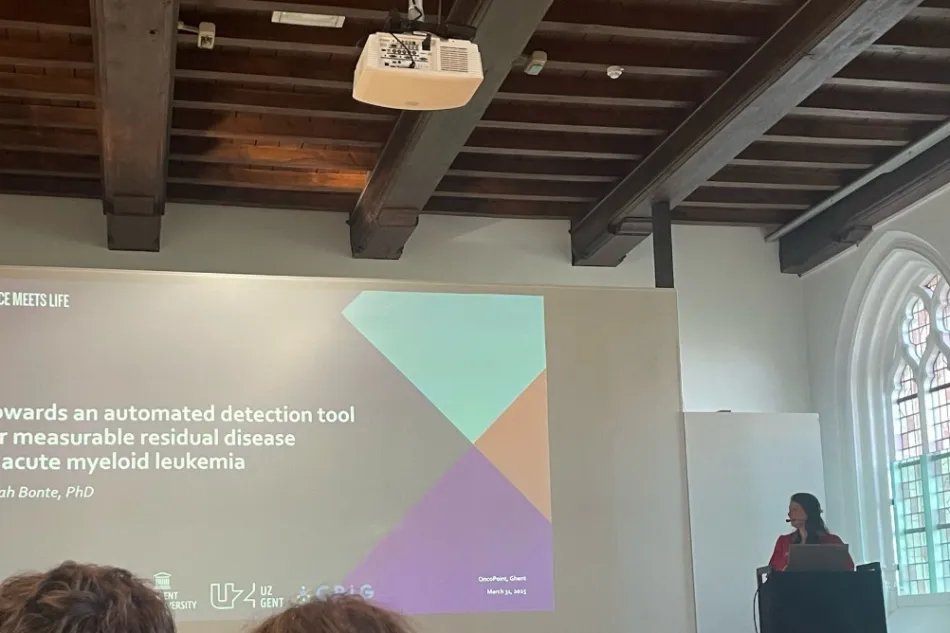
Sarah and Katrien at the OncoPoint symposium
At the OncoPoint symposium, organized by the Cancer Research Institute Ghent (CRIG), Katrien presented her work on computational analysis of immune cell population dynamics after immunotherapy in a 2-minute pitch presentation and a poster. In addition, Sarah gave a talk about her measurable residual disease detection project for which she received a Young Investigator Proof-of-Concept grant from CRIG.
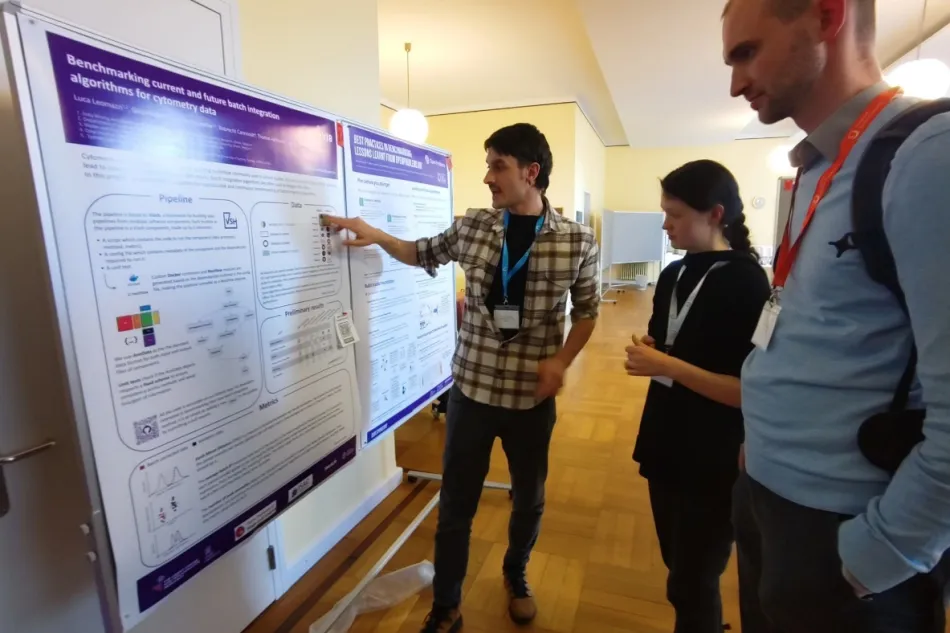
Luca in Ascona
Luca attended the “Modern Benchmarking: advancing computational methods in molecular biology” conference in Ascona, Switzerland. He presented his work on benchmarking batch integration algorithms for cytometry data, a very interesting topic and perfect fit for this conference.
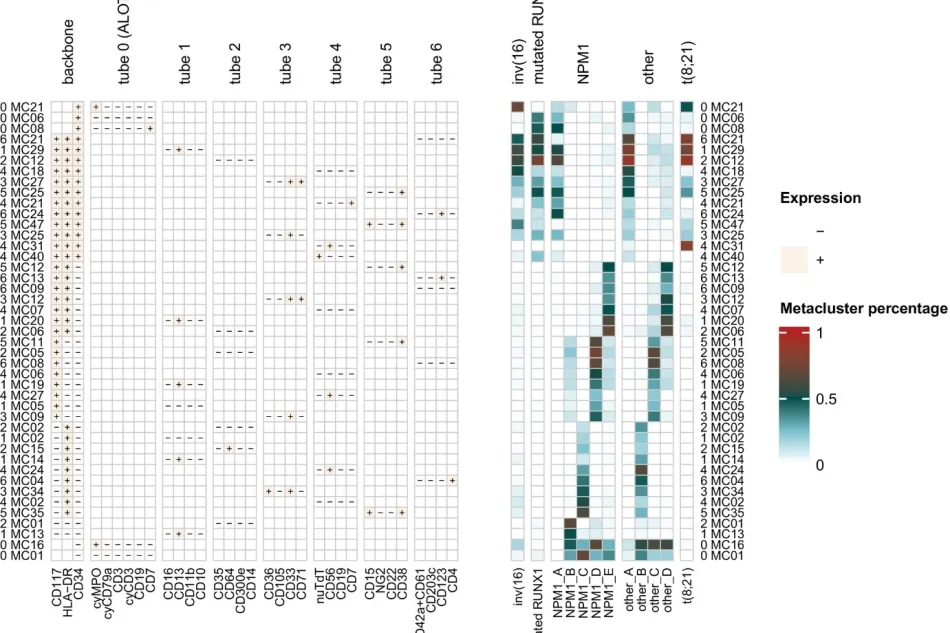
AML paper in Cytometry B
New publication alert! This paper from Artuur Couckuyt, Sofie Van Gassen, Sarah Bonte, and collaborators from the Ghent University Hospital introduces a computational pipeline to explore the immunophenotypic landscape in acute myeloid leukemia. We revealed patterns in protein expression that correlate with genetic abnormalities and trained ML models to predict the 2-year survival rate, the ELN risk category and more. To improve the interpretability, we used explainable AI, a new field that tries to shed light on the black box that is AI.
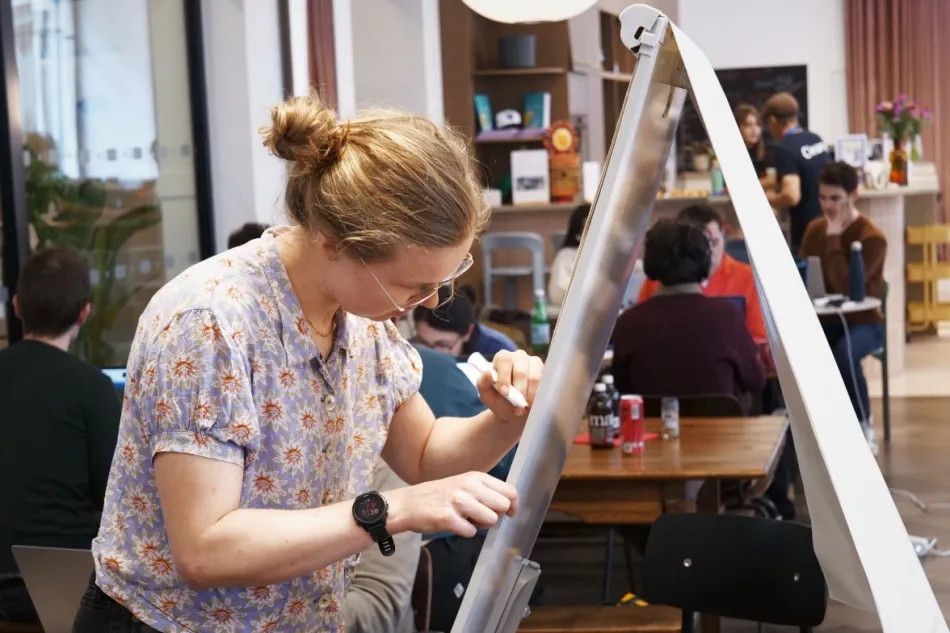
scverse hackathon in Paris
At the scverse hackaton in Paris, Lotte, Louise, Karen and Benjamin worked together with bioinformaticians from across the world to develop open-source packages for spatial omics data analysis. Lotte: “We expect multiple results from this hackaton: some people are solving bugs, some people are making the plotting faster, some people make the tool more scalable. I actually want more people to be able to use this tool and get excited about using spatial data.”
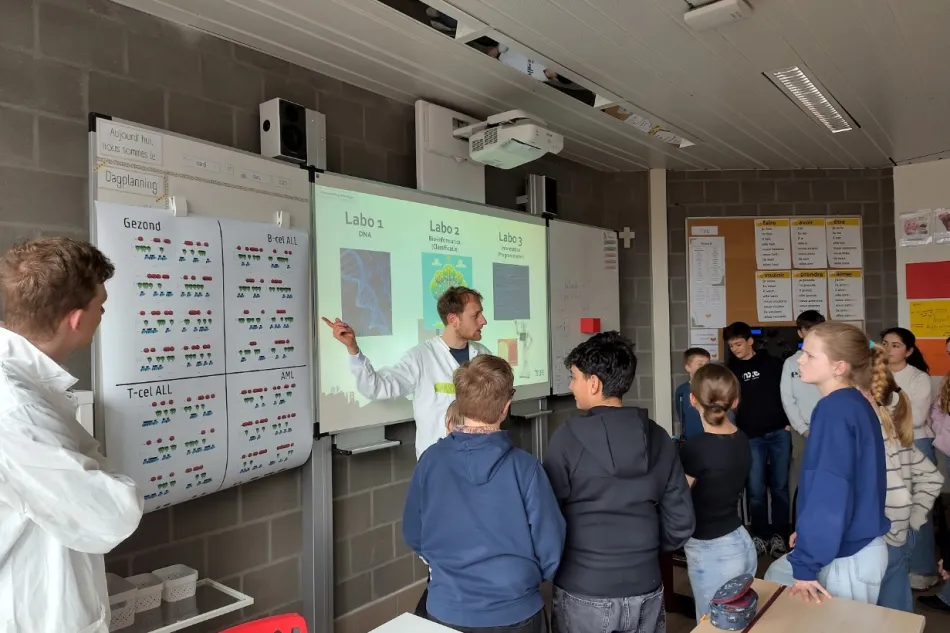
Science on the Road
We visited the primary school of SFB Melle and explained biological and bio-informatics concepts to 11- and 12- year olds. They learned more about various topics, from the types of immune cells in the blood to how large language models like ChatGPT actually work. In the afternoon, they put the theory into practice and extracted DNA from their saliva, built decision trees and tried to get a robot to make a sandwich. Science is fun!
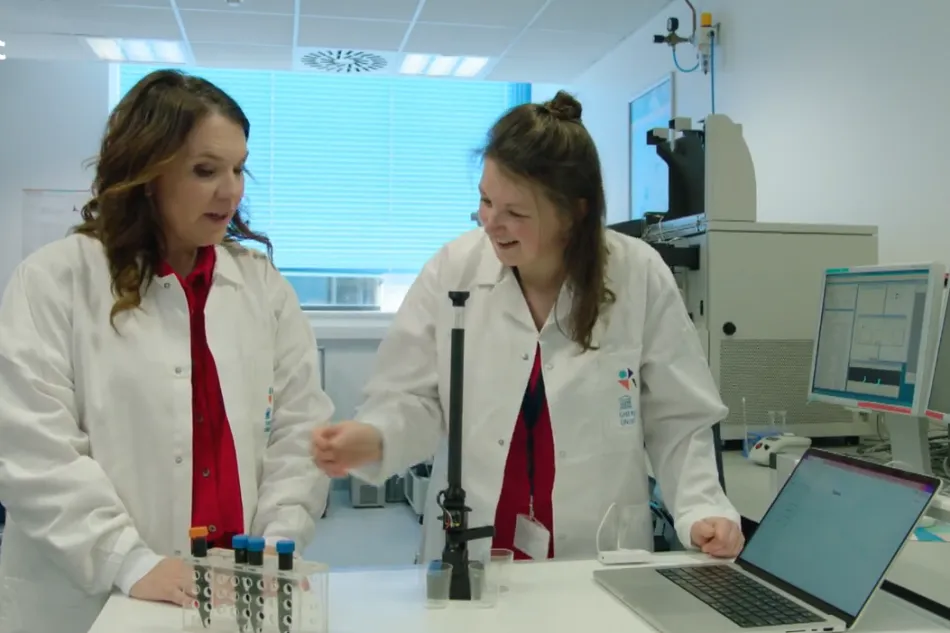
Lichtpuntjes tegen Kanker on TV
As part of the “Lichtpuntjes tegen kanker” campaign of Kom op tegen Kanker, VRT1 and Radio2, Sarah had the exciting opportunity to explain her research on national tv. She explained how we can use the computer to detect measurable residual disease in blood cancer.
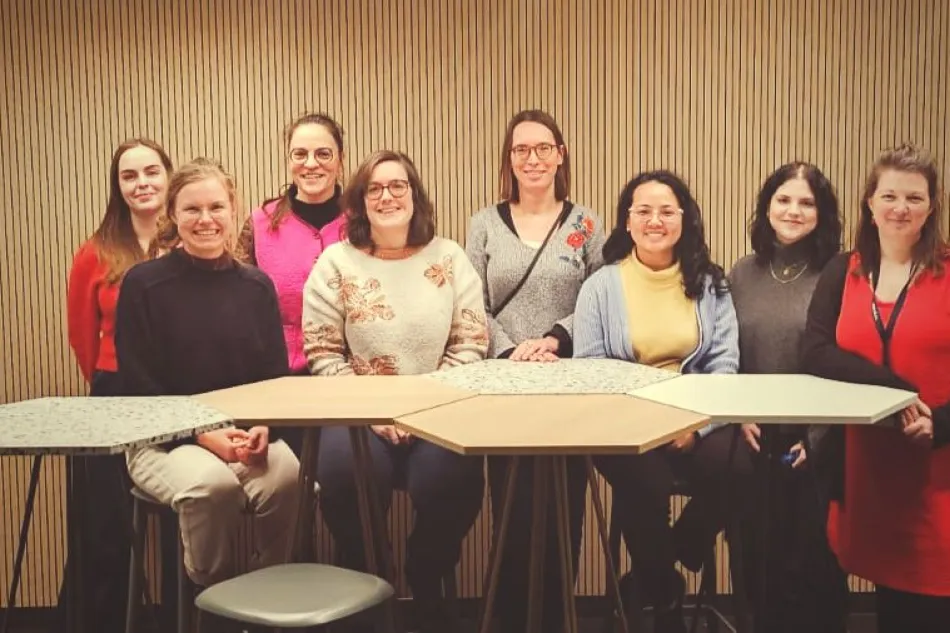
Women in Science Day
Celebrating Women in Science Day with the brilliant women of our bioinformatics lab! From decoding genomes to advancing AI in healthcare, they’re shaping the future of science. PS: We are even missing 7 women in the picture, bringing the lab total to 15!
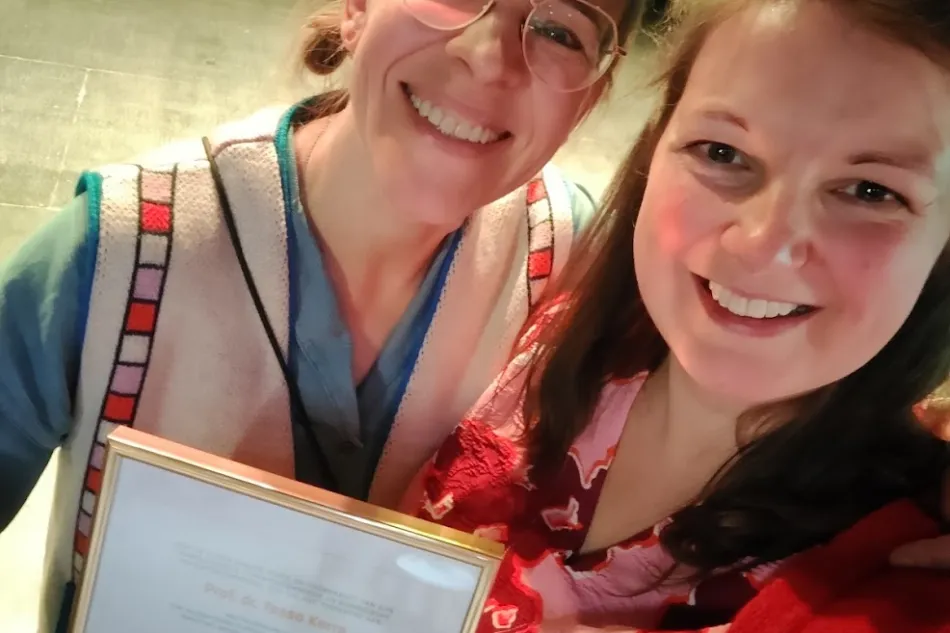
Award ceremony Kom op tegen Kanker
At the Depot in Leuven, Kom op tegen Kanker held an official award ceremony for all researchers who received a grant for their projects. Sarah received a 454 000 EUR grant for a project on “Automated detection of measurable residual disease in hematological malignancies”, together with Prof Dr Tessa Kerre and other collaborators from the Ghent University Hospital. Good luck with this project in the next 4 years!
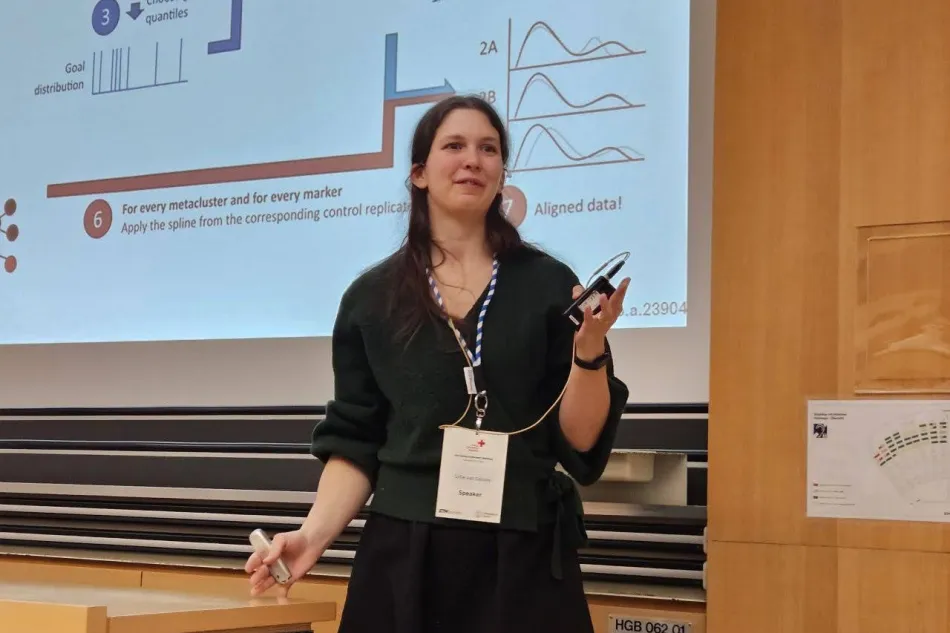
Sofie @ Swiss Cytometry Meeting
At the Swiss Cytometry Meeting in Zurich, Sofie presented both a tutorial on computational cytometry and an update on the clinical research where we are applying these tools.
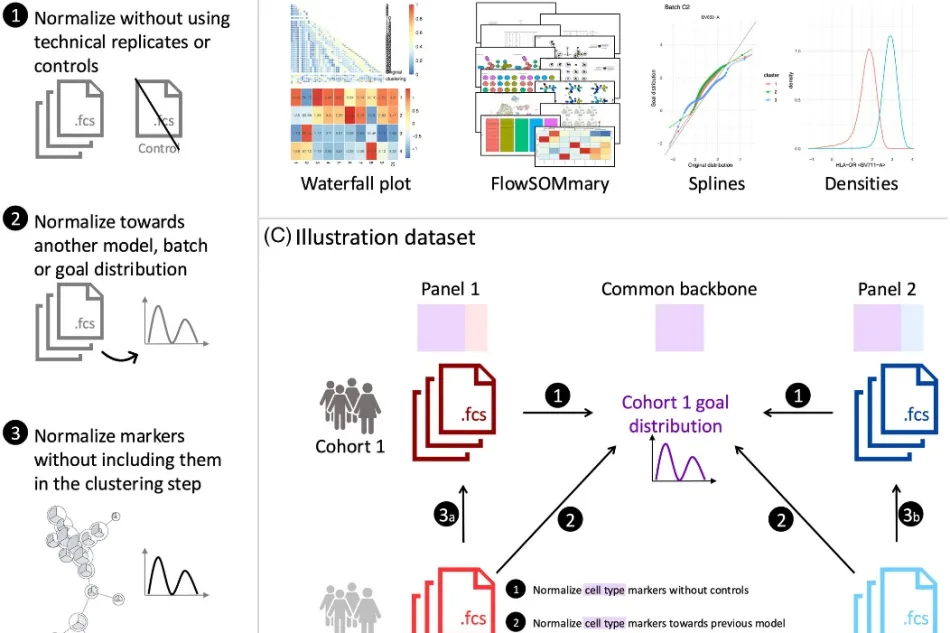
CytoNorm 2.0 paper in Cytometry A
New publication alert! Carefully planned your cytometry experiment but still detecting batch effects? CytoNorm 2.0 to the rescue!
We discuss new use cases, including how to correct batch effects when you don't have access to technical controls, and show some new, enlightening visualizations.
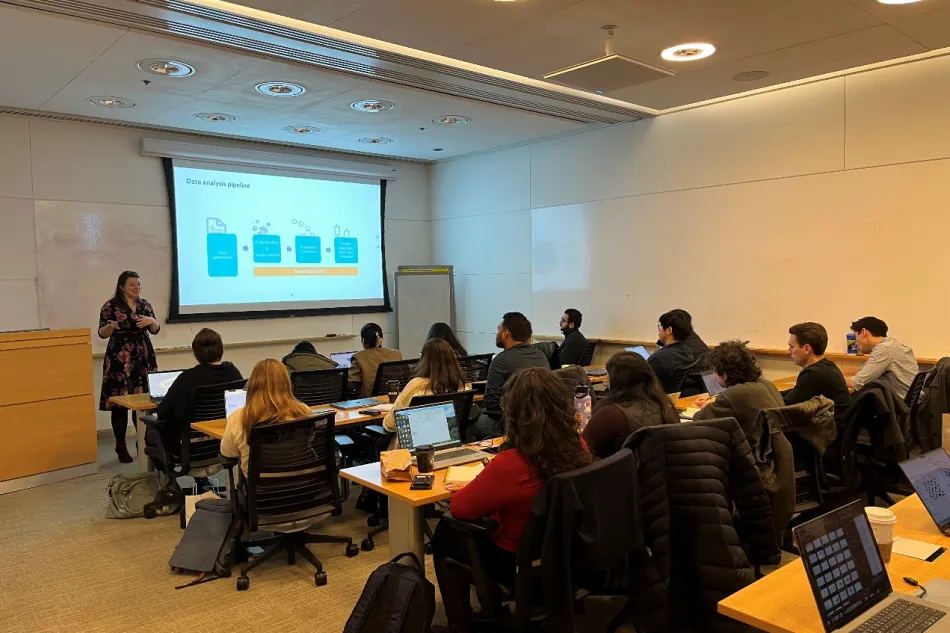
Spectral Course NYC
The first international spectral panel design workshop took place at MSKCC in New York City. Participants went through the entire spectral cytometry workflow from panel design to staining, sample acquisition, unmixing and finally data analysis. Sarah was one of the lecturers at the course, teaching the participants about best practices in cytometry data analysis.
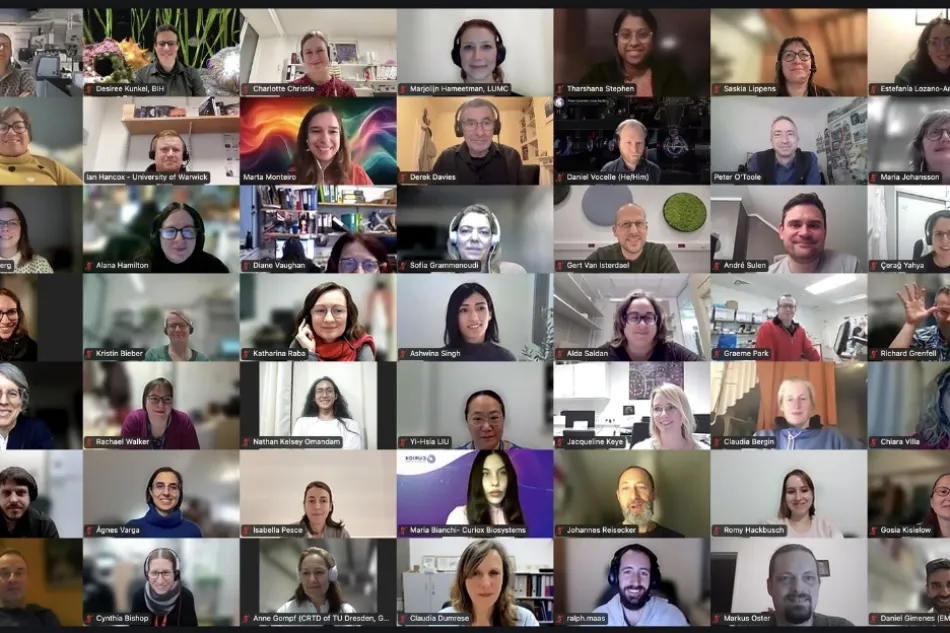
Virtual European Flow Core Meeting (talk Sarah)
At the second Virtual Flow Core Meeting, Sarah gave a talk about data preprocessing: “From raw to ready: why data preprocessing is essential for reliable cytometry data analysis”. Hope she could convince everyone of the importance of cytometry data preprocessing!
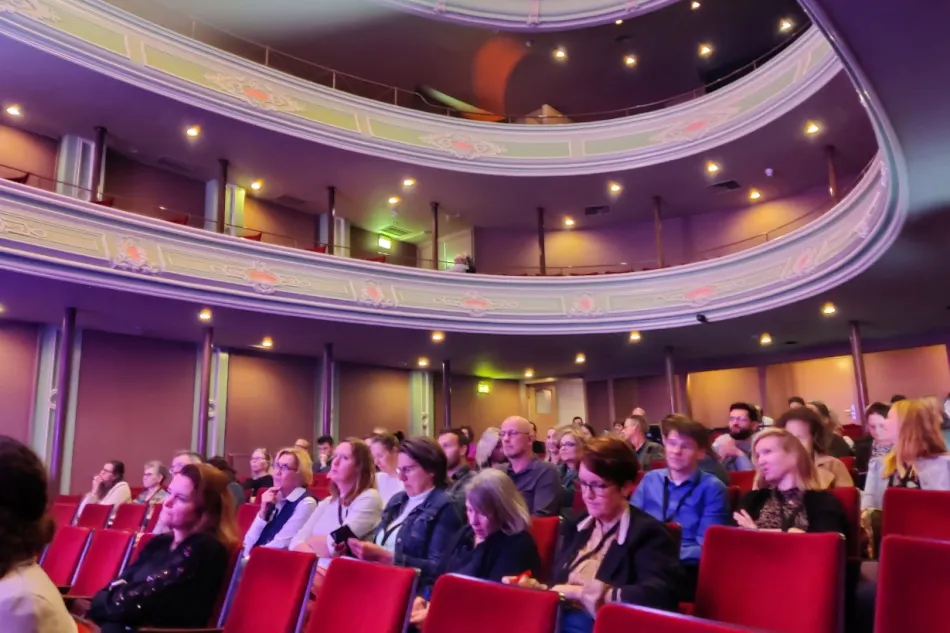
Talk Sarah at NVC conference (Dutch Cytometry Society)
At the yearly conference of the Dutch Cytometry Society, Sarah talked about “Computational cytometry: the why and how of data preprocessing” in the beautiful Odeon theatre in Zwolle.
Louise, Lotte and Benjamin at Basel hackathon
Louise, Lotte and Benjamin worked together with 20 developers from the Python, R, and web communities to work on interoperability, performance, and ergonomics for spatial omics data at the SpatialData 3-day hackathon in Basel, Switzerland. The full hackathon results are available here: https://osf.io/preprints/biohackrxiv/8ck3e.
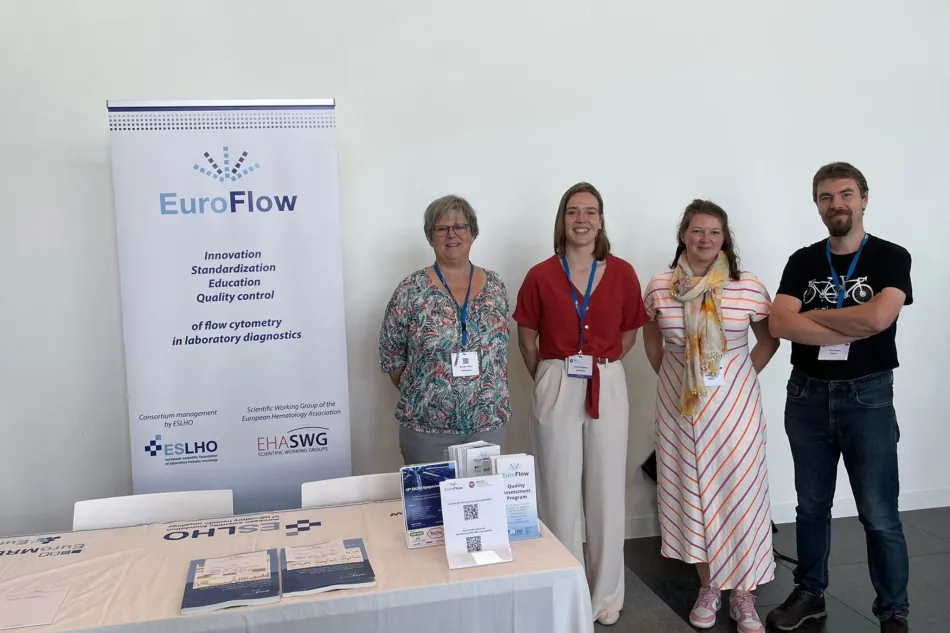
We are part of the EuroFlow consortium!
We are thrilled to announce that SaeysLab is now officially a member of the EuroFlow Consortium! Through this collaboration, we will work alongside leading experts in clinical cytometry to further contribute to standardization of clinical cytometry workflows and data analysis (because we love consistent, accurate and reproducible results), leading to improved diagnostic patient care.
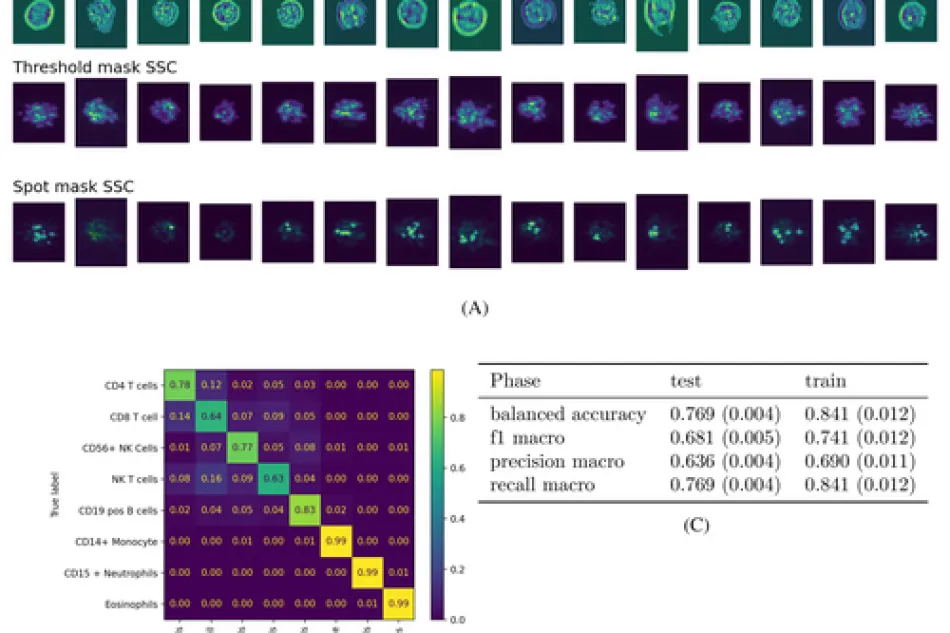
SCIP
The SCIP paper of Maxim has been published! If you have imaging cytometry data that you want to analyse, SCIP is the package to use.
Scalable Cytometry Image Processing is an open-source tool that implements an image processing pipeline on top of Dask, a distributed computing framework written in Python. SCIP performs normalization, image segmentation and masking, and feature extraction.
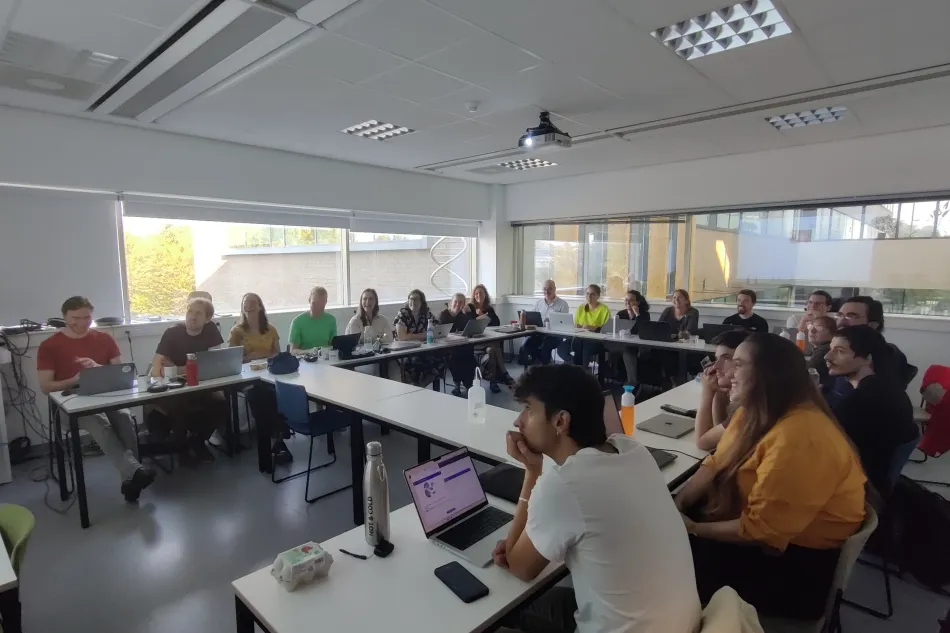
Saeyslab conference
We started a new tradition where we sit together with the whole group and where we want to learn from each other. It is a fascinating week where each subteam gets to share their expertise with the other lab members: from cytometry over scRNA-seq to spatial omics and where we learn to use each others tools. The goal is to develop new collaborations in the lab and to brainstorm intensely on hot topics.
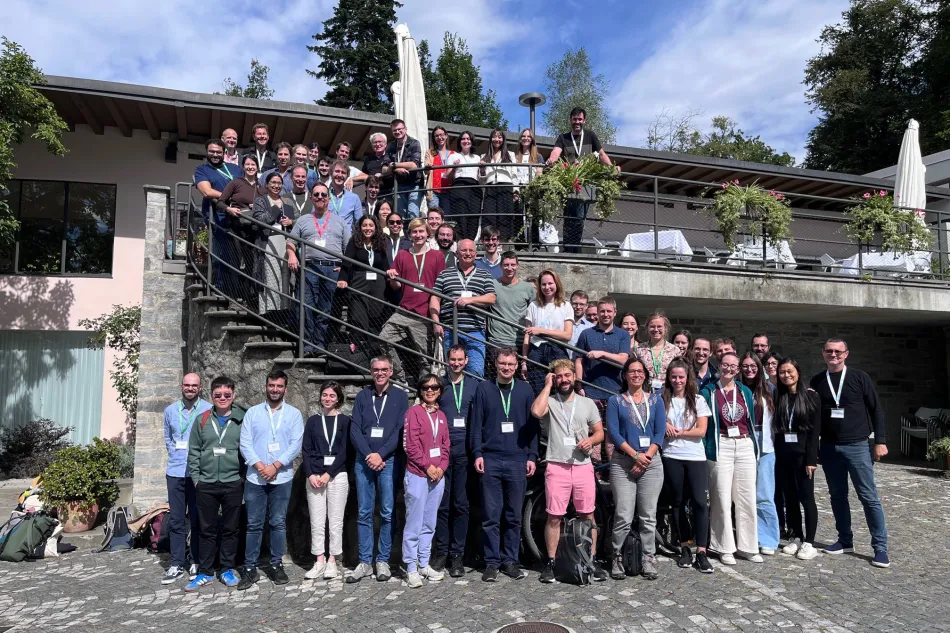
Ascona workshop
Try to spot Lotte and Michiel at the Ascone workshop about Spatial and temporal statistical modeling in molecular biology.
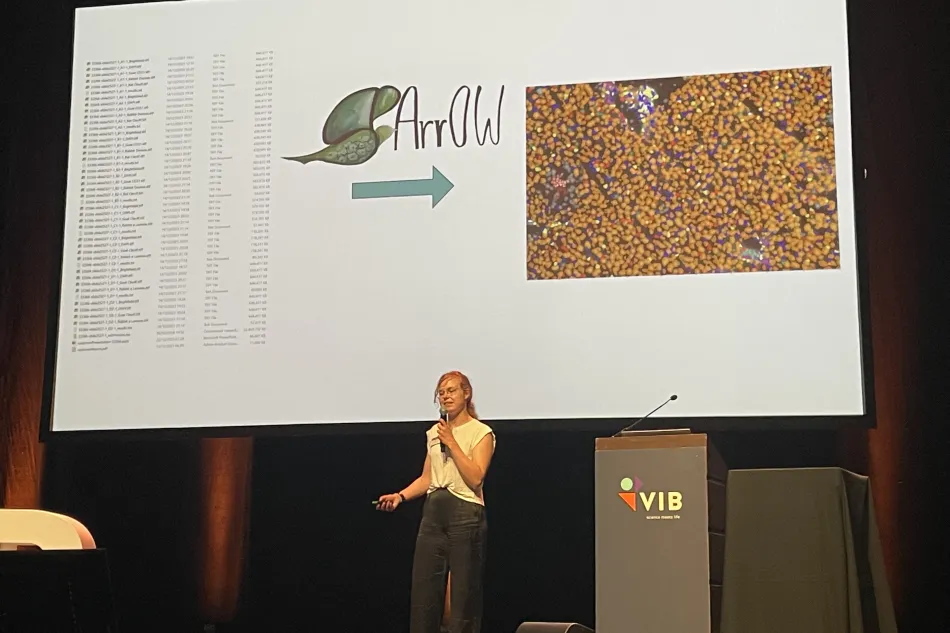
Lotte on stage
Proud to see our own Lotte Pollaris presenting her SPArrOW work during the Spatial Omics conference!
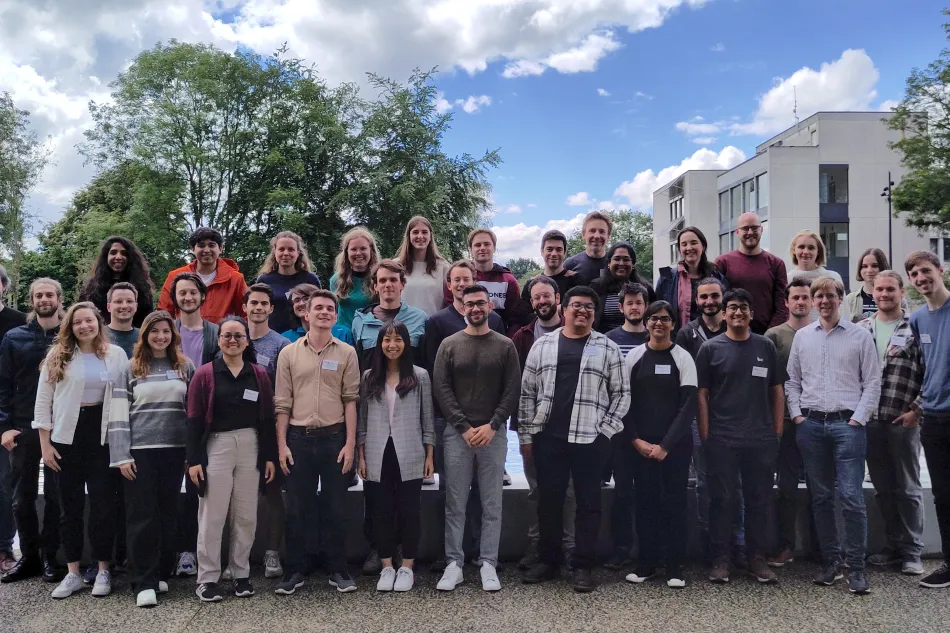
Our VIB Hackathon on spatial omics
During three days, we gathered 37 researchers of 30 institutes from 12 different countries to collaboratively work on new spatial omics tools and methods. Thank you to all the participants!
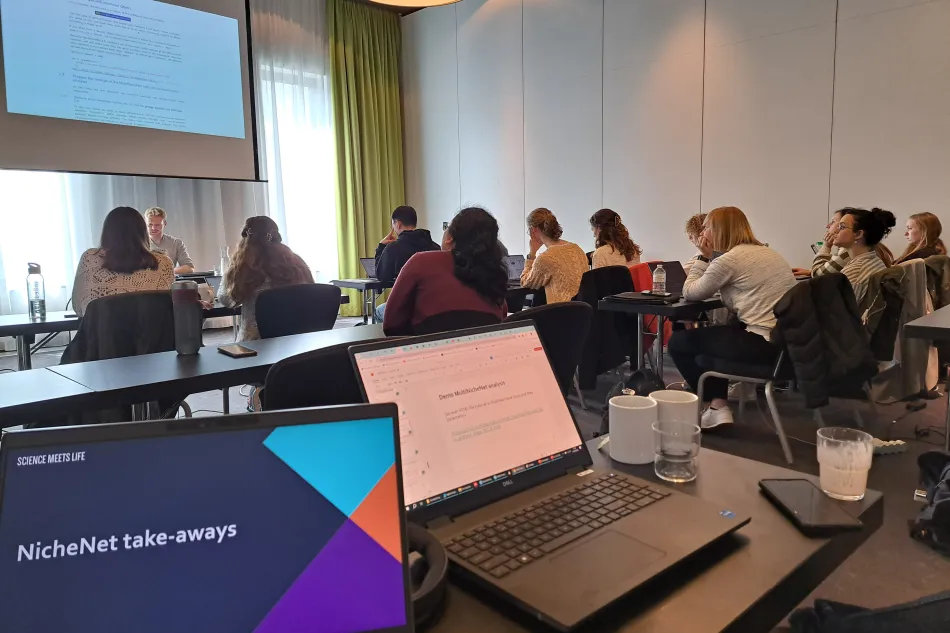
NicheNet training
Robin Browaeys, Chananchida Sang-Aram, Daniele Pittari and Ruth Seurinck had a great time helping out participants bringing theory in to practice at the first VIB NicheNet training.
And ? to Janick Mathys for the organizational help! If you want to get started with NicheNet or MultiNicheNet yourself, please check out
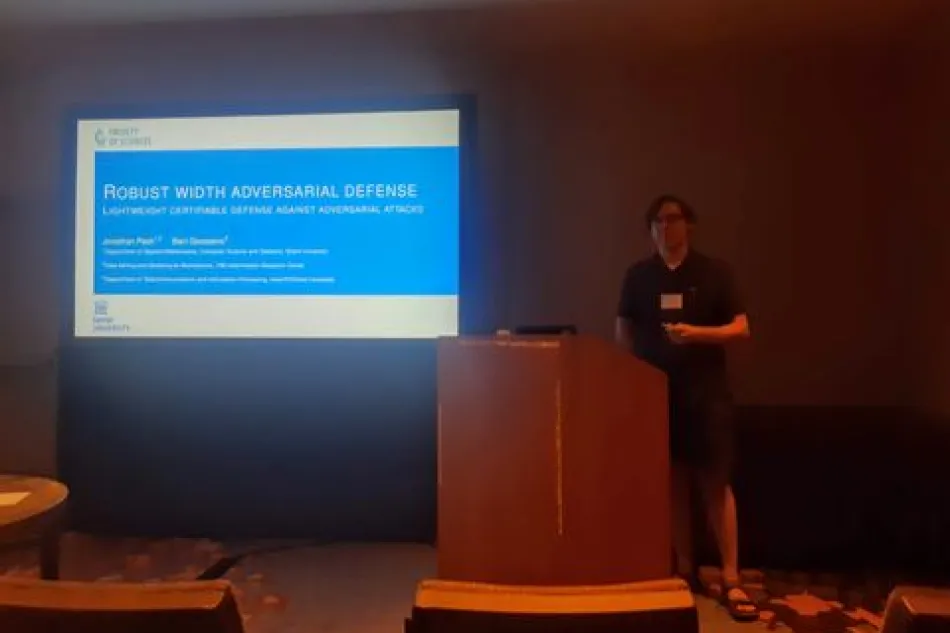
Jonathan @SIAMIS24
We are proud to present our work where we show that classical compressed sensing techniques can be used to obtain a defense against adversarial perturbations that is not only very efficient but also has nice interpretable robustness guarantees.
The tale of Arne and his benchmark
We investigated 10 different quality metrics for attribution-based explanations on 8 image datasets, and used the results to propose a set of benchmarking guidelines.
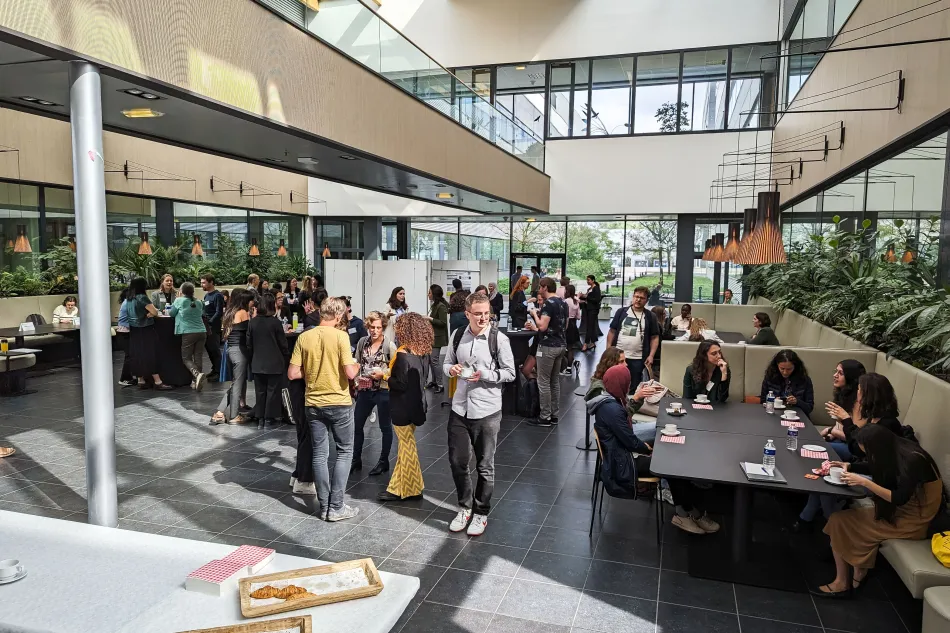
Women in Data Science Belgium
The first Women in Data Science conference in Belgium was a remarkable experience that underscored the importance of diversity and inclusion in our field. It was inspiring to see so many talented women share their expertise, reinforcing how crucial a supportive community is for driving innovation. The event highlighted the vital role of managers and directors in championing diversity, as a diverse team leads to better decision-making and greater innovation.
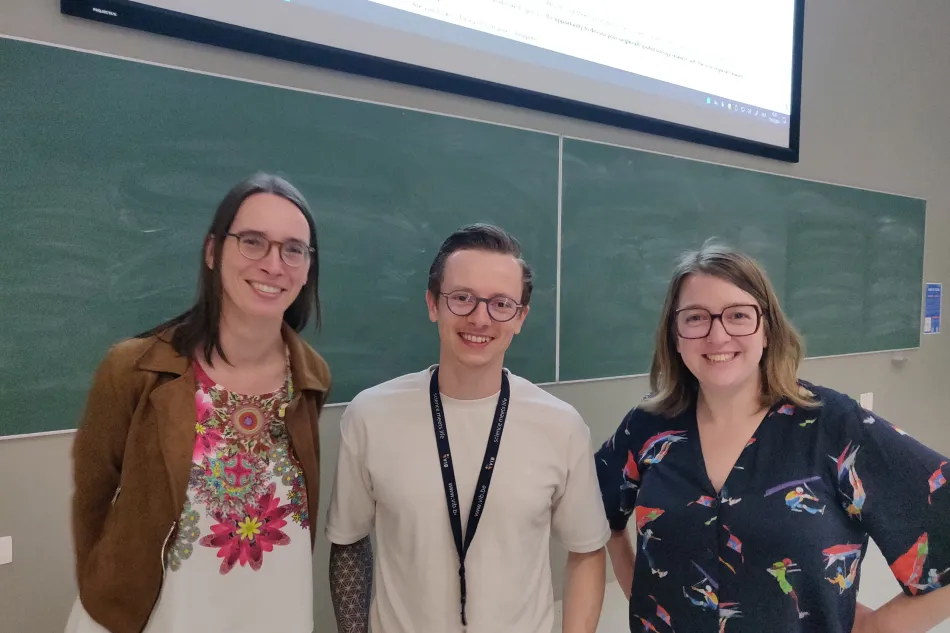
SiNG
What better way to network with other single cell enthousiasts than eating pie! Our own Ruth co-organized again a fruitful networking afternoon.
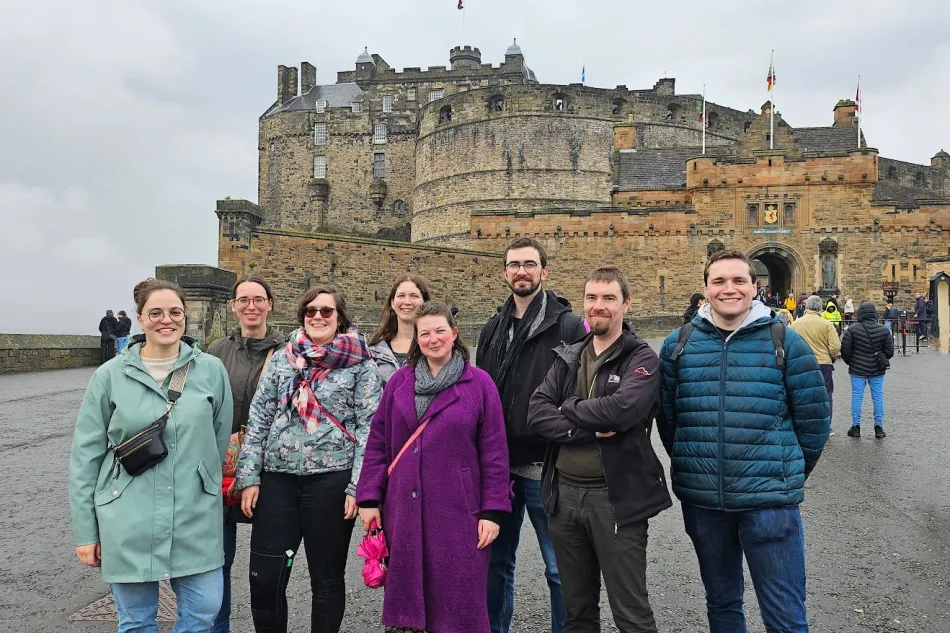
SaeysLab @CYTO2024
We were again well represented at the Cytomeeting this year in Edinburgh. Not only did we have a workshop about preprocessing but we also held a workshop about CITE-seq. Next to that, we bombarded the cytometry audience with talks and posters. Add in some networking and setting up new collaborations and we can conclude a terrific conference this year.
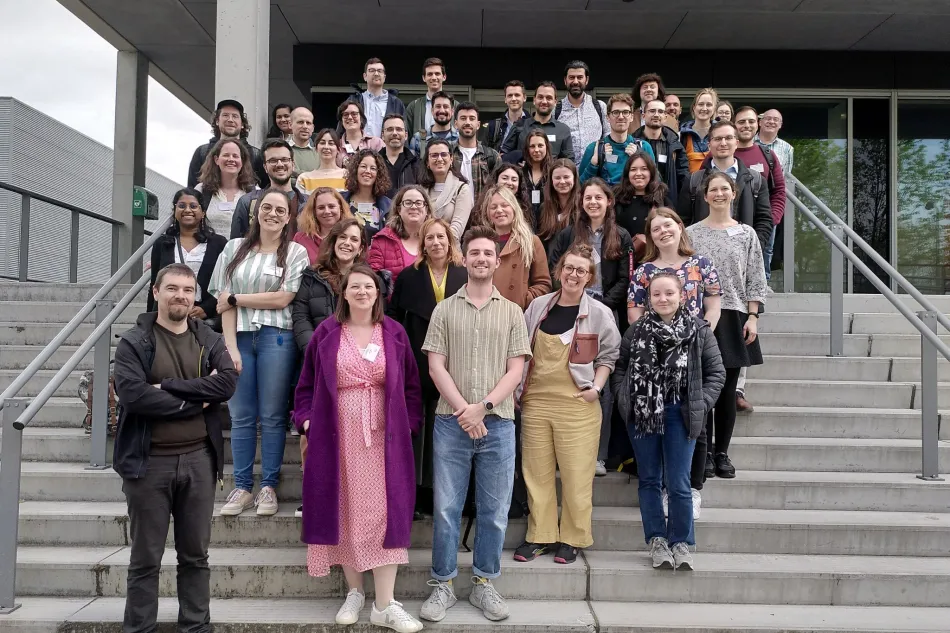
Computational Cytometry Summer School
For the very first time, we organized a summer school where we had 40 participants that were complete immersed in the wonderous world of computational cytometry. After two days of tutorials and theory, they even had a go at their own data. Next to the computational world we also showed them some Belgian cuisine. This is definitely to be repeated!
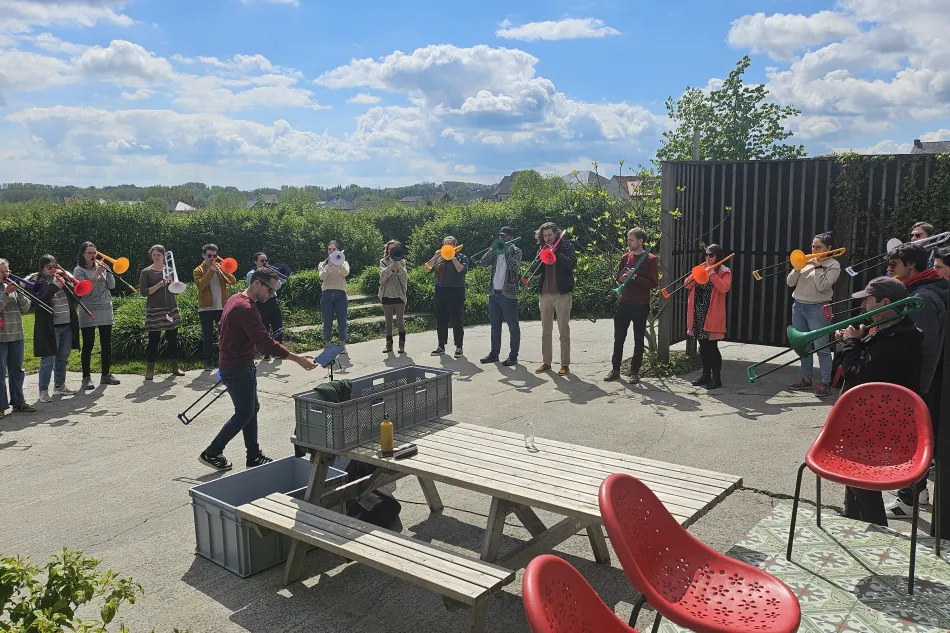
Teamstorm
This week our "not in office" sign was put up for three days. As a yearly tradition we went away with the whole team for a teambuilding. Next to having in depth discussions about the future of SaeysLab, we also had to please the taskmaster by making scientific figures from DUPLO, write a PhD speech for Yvan, make our own trophies etc., Next to this, we got an introduction of the trombone where we went from sounding like a dying whale to sounding like a bird and we had to participate in a quiz where the discussion rose again if we could identify different Italian cheeses.
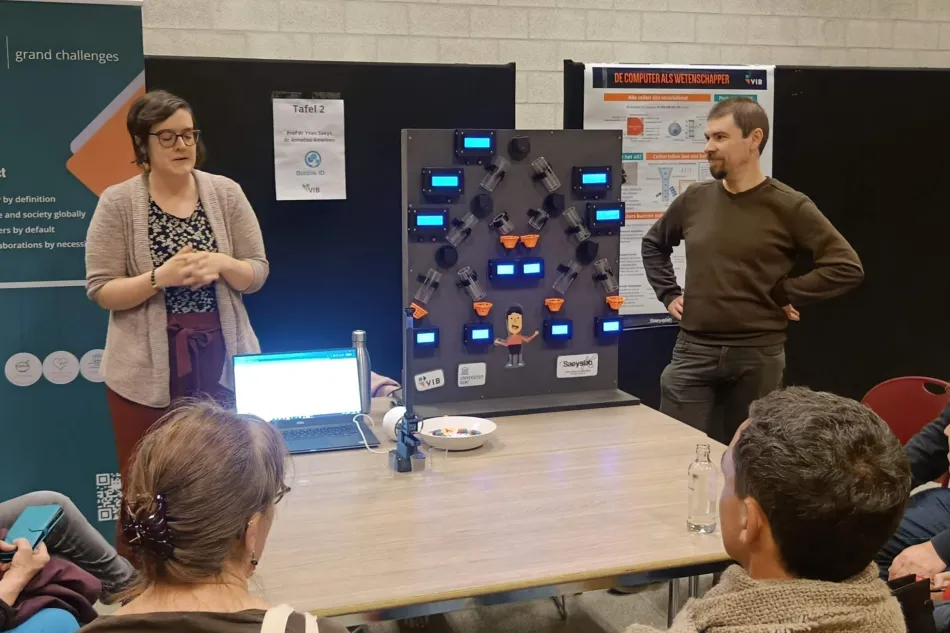
BubbleID patient day
Because we are working on data that comes from patients with a PID, we want to explain our computational approach to them so that they have an understanding of what we are doing with their data. We had the opportunity to do this during the BubbleID day. We brought our 3D-printed marble sorter and our decision tree to try to achieve this.
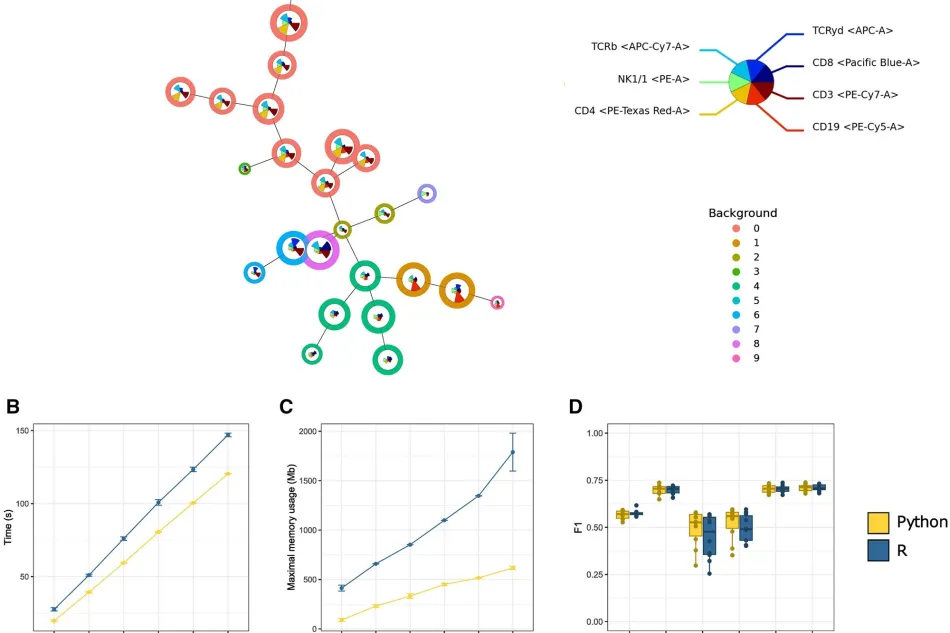
FlowSOM in Python
Are you a FlowSOM enthousiast but you only code in Python? Do not fret! Artuur left us with a parting gift. He made the effort to convert all the R code to Python and published his results in Bioinformatics.
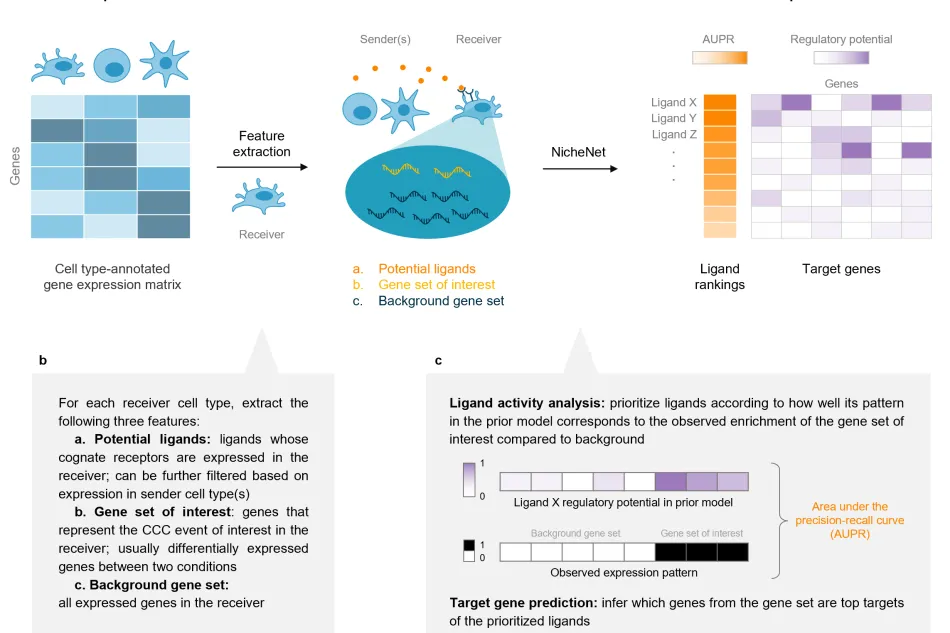
Sai gives you NicheNet's best practices
After four years of user feedback and experience, we wrote a NicheNet best practices guidelines.
Some highlights:
- A 'Sender-Agnostic' approach which considers ligands from the microenvironment instead of sender cells.
- The prioritization of cell type-specific ligand-receptor pairs.
- A helpful flowchart for feature extraction!
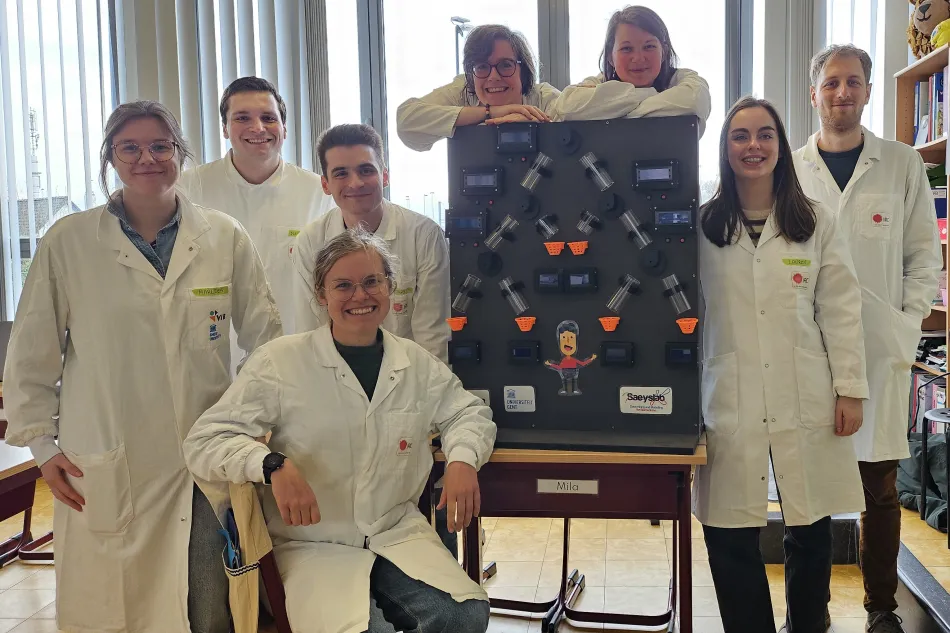
Science on the road
Today, we visited the primary school of SFB Melle and explained some biological and bio-informatics concepts to 11- and 12 year olds. They now know which immune cells reside in our lab, could pipette some beautiful colors, they looked at their own cheek cells through the microscope, did a flow cytometry experiment, extracted their own DNA and tried to let a robot eat a sandwich with "muizenstrontjes". A day filled with science!
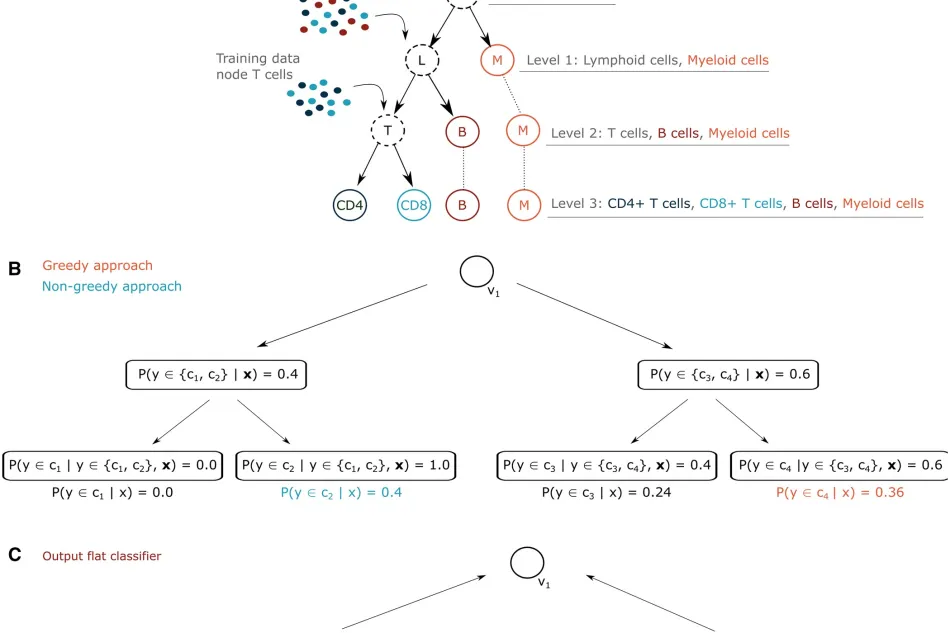
How can we improve trustworthiness of cell type classifiers?
Well, for example by addressing uncertainty inside the classification process itself with the help of hierarchical models with a reject option. In this study, we evaluated cell type annotation with (normal) flat and hierarchical models and the possibility of full or partial rejection to formulate best-practices guidelines for future development of automatic, uncertainty-aware cell type classifiers.
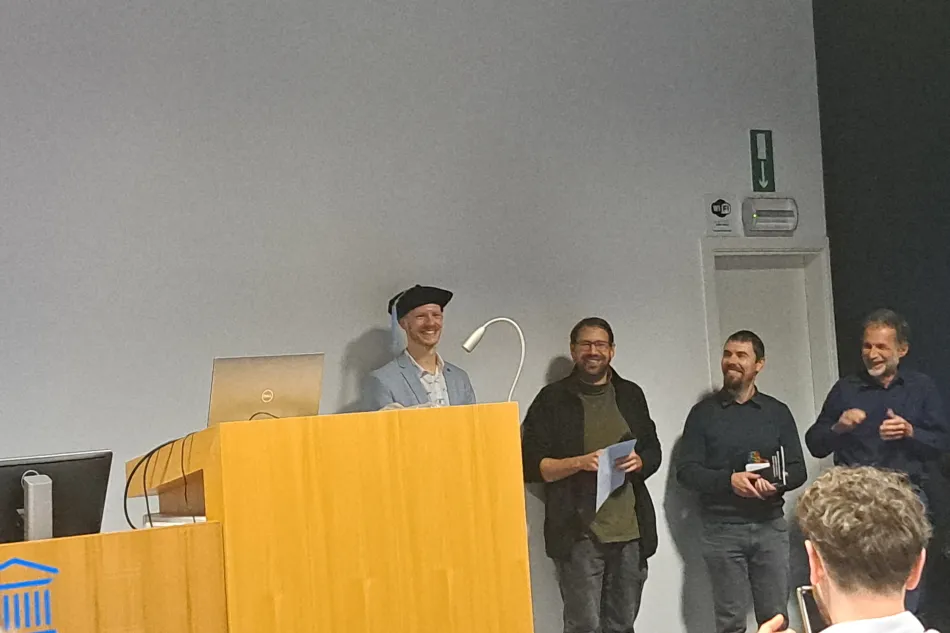
Dr. Couckuyt
Another Saeyslab PhD student graduated! We are sad to see you go and we will miss you in our cytometry team. Congratulations dr. Couckuyt!
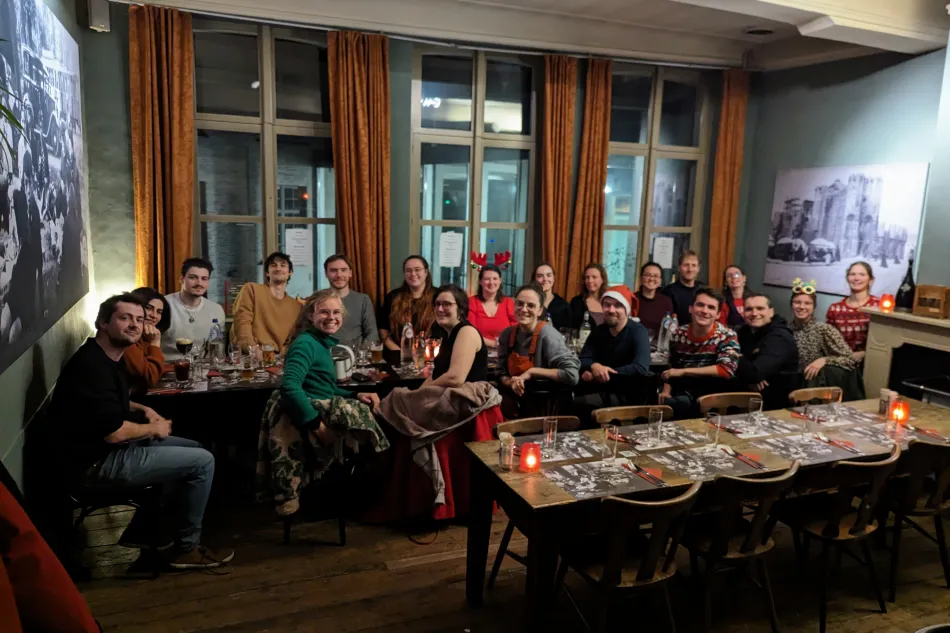
Merry Christmas and a Happy New Year
Following tradition, we had our secret Santa Saeyslab dinner. We all wish you the best papers, research and love for 2024.
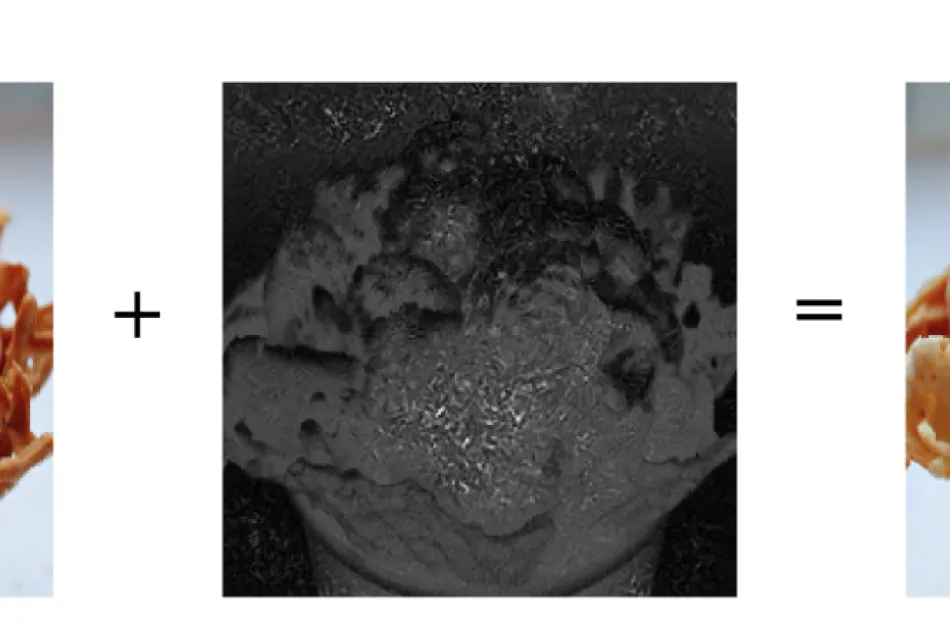
New paper: An introduction to adversarially robust deep learning
Despite their amazing performance across many tasks, deep neural networks are in fact very fragile: small and insignificant perturbations can cause them to produce wrong results. Much research has gone into this problem over the past decade, but we are still far from satisfactory solutions. In our recent survey paper, we discuss the history of the field and its most salient contributions. We pay particular attention to the shortcomings of existing methods and identify promising avenues for future research towards robust machine learning.
prof. Yvan Saeys recognized as Clarivate Highly Cited Researcher 2023
Each year, Clarivate recognizes “Highly Cited Researchers” who have demonstrated significant and broad influence in their field of research. Researchers are selected based on their exceptional contributions to their research field, as judged by papers that rank in the top 1% by citations for a field and publication year in the Web of Science™.
This year, Yvan is one of the less than 7125 or 0.1% of researchers worldwide who are recognized as “Highly cited researchers". Congratulations to Yvan!
A robust pipeline for high-content, high-throughput immunophenotyping
We recently analyzed a 28-color cytometry dataset with data from more than 3000 healthy donors! While our computational pipeline was more sensitive to technical issues than the manual analysis pipeline, we still identified several immune populations correlating with age and discovered a distinct immune signature for patients with a CD45 SNP. Thanks to Thomas Liechti and Mario Roederer for the opportunity to work on this dataset!
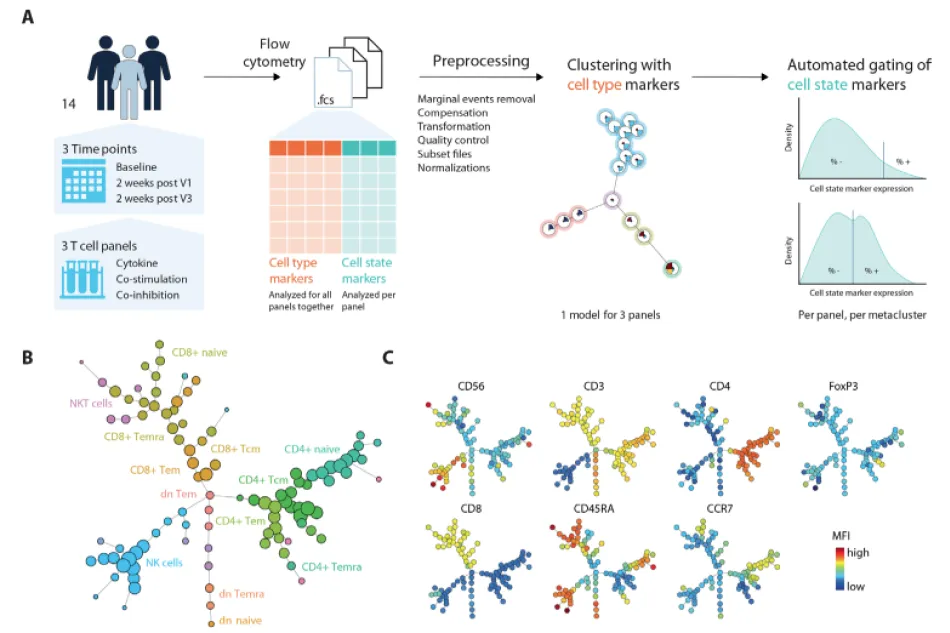
Katrien's MESOPEC paper
Katrien recently got her paper published where she collaborated with clinicians from the Erasmus MC Cancer Institute in Rotterdam.
In this study, a phase II clinical trial was conducted to evaluate adjuvant dendritic cell-based immunotherapy in patients with malignant peritoneal mesothelioma. The therapy was found to be feasible and safe, and showed promising survival outcomes. In addition, a comprehensive computational cytometry analysis revealed immune modulatory effect on lymphoid cells and induced memory T-cell activation.
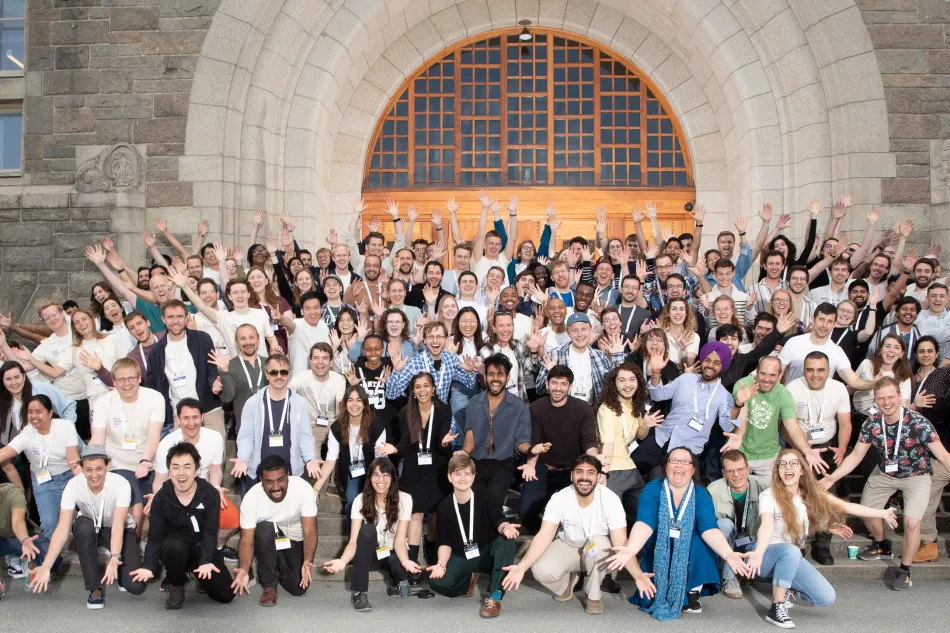
Lotte @ ProbAI Summer School
Lotte spent a fruitful week at the ProbAI summer school in Trondheim thinking about how we can incorporate prior knowledge and uncertainties into our ML models.
Can you spot her?
BD discovery
Our FlowCore received the very first BD FACS Discover S8 which means that we will receive a large number of data in the future. Fortunately Sofie reassured us that we can handle this!
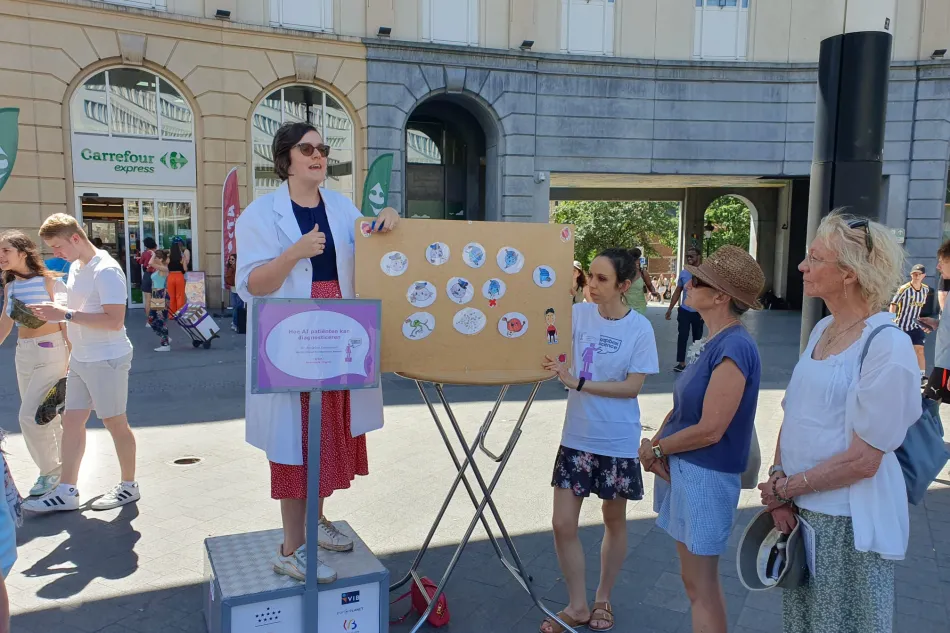
Soapbox Science
Annelies participated in the soapbox science event. She presented her research to people passing by using only a piece of cardboard and some LEGO blocks.
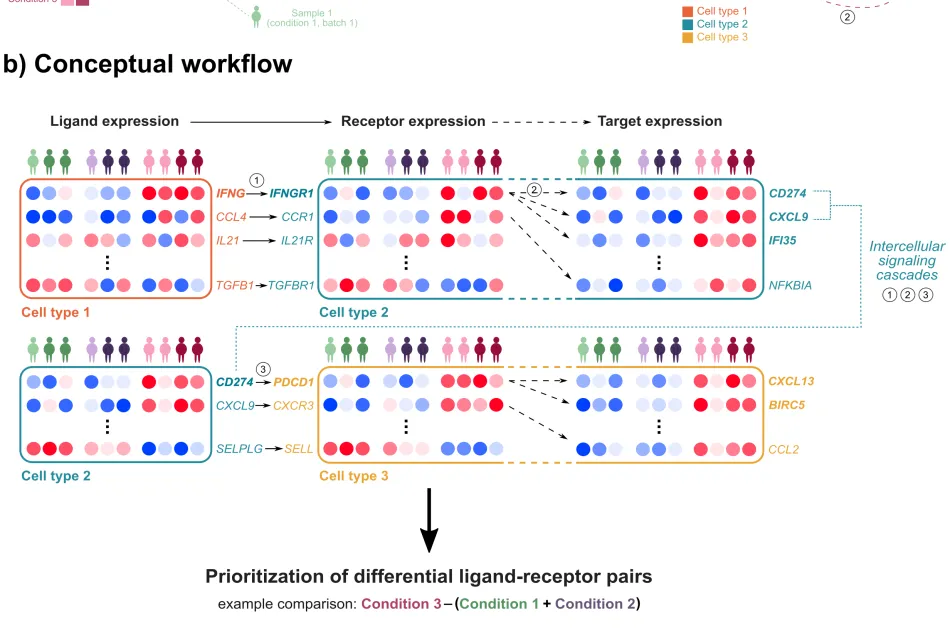
MultiNicheNet and NicheNet-v2
We are proud to present this new paper published on bioRxiv showing two improvements to our NicheNet ecosystem for studying cell communication. NicheNet-v2 is an update of our ligand-receptor-target model. MultiNicheNet is a new tool for differential communication analysis.
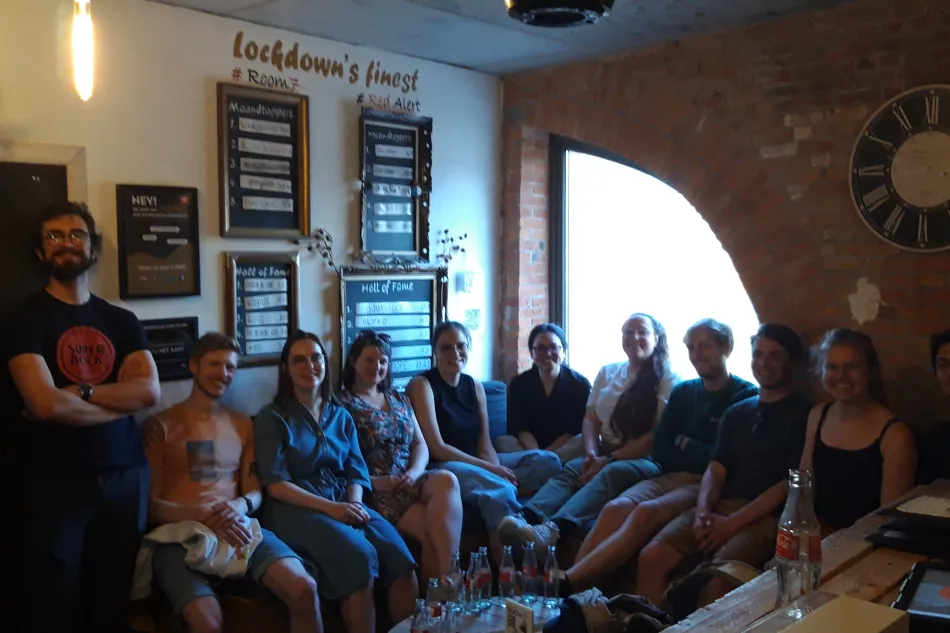
SaeysLab escapes
It was time for another teambuilding where multiple colleagues succeeded in beating two escape rooms!
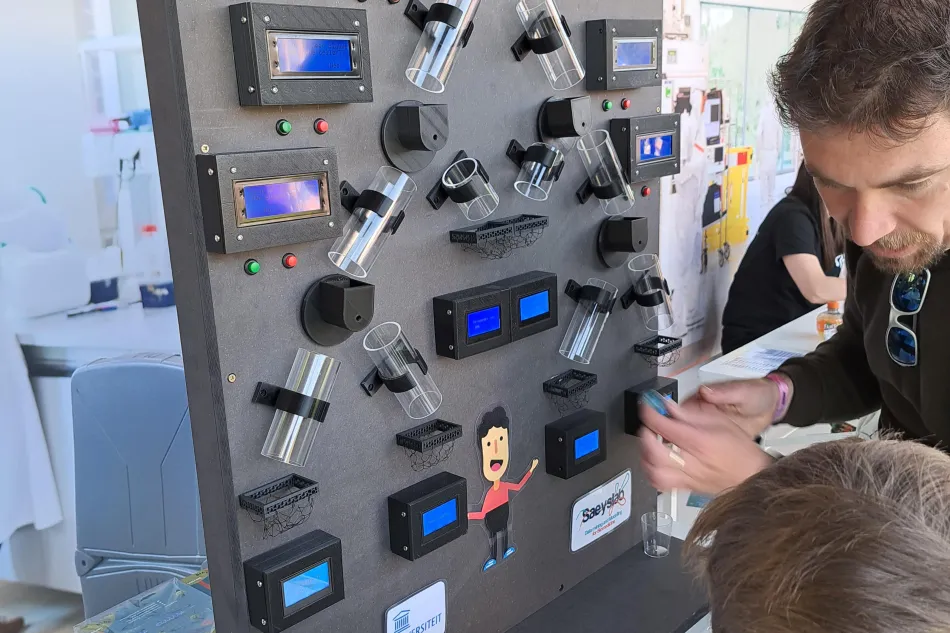
SaeysLab @ Nerdland
This weekend, SaeysLab was represented on the science festival "Nerdland". We brought our tiny flow sorter and giant decision tree to explain our diagnostic pipelines to fellow science enthusiasts.
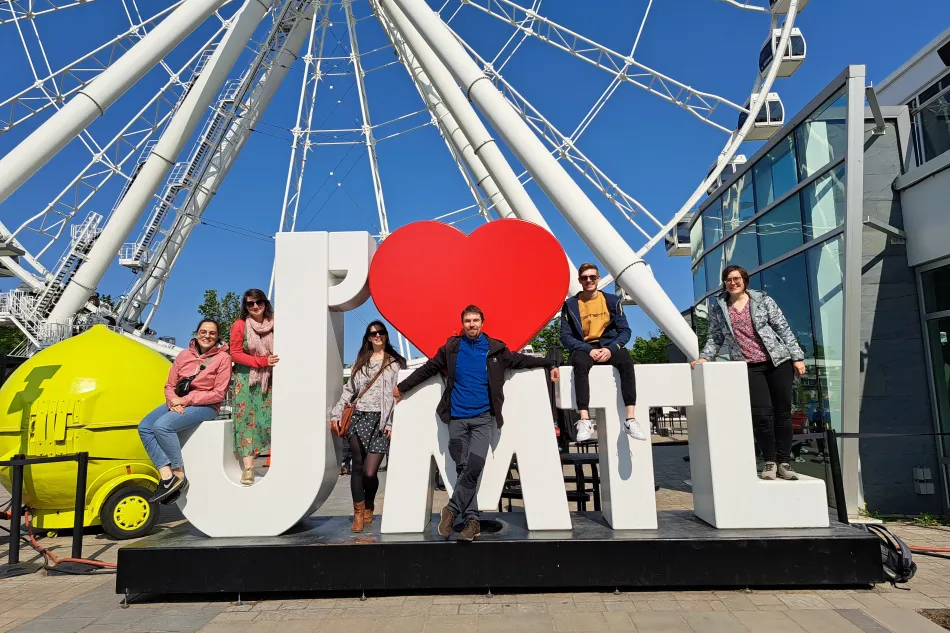
CYTO 2023
The entire cytometry team visited Montréal to attend the CYTOmeeting. With 2 workshops (about preprocessing and collaboration), 4 talks and 2 posters, they were highly represented on the conferences. We learned a lot and spread the word about our computational cytometry tools and pipelines. The parties were of course a nice addition as well.
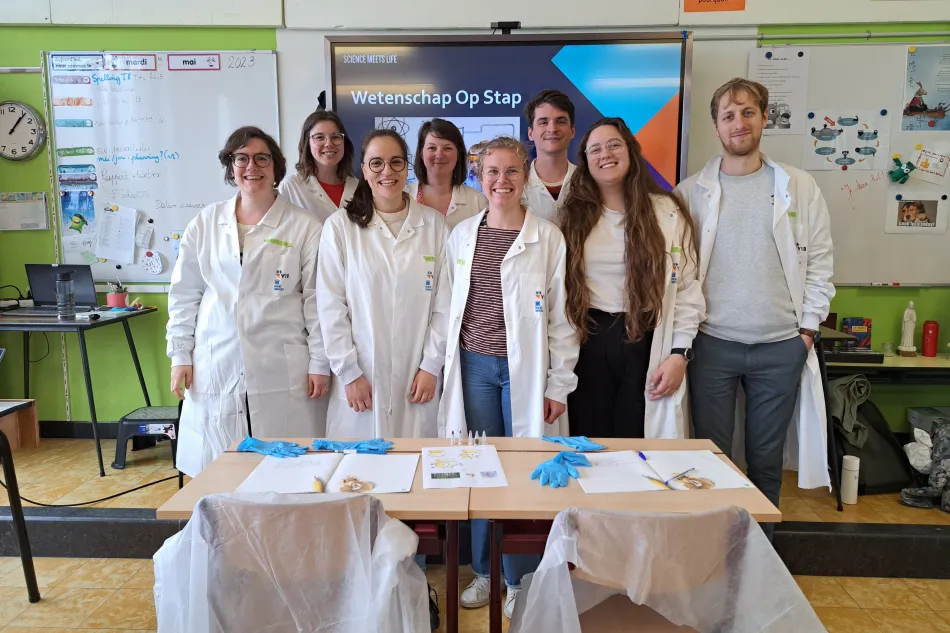
Science on the road
Today, we visited the primary school of SFB Melle and explained some biological and bio-informatics concepts to 11- and 12 year olds. They now know which immune cells reside in our lab, could pipette some beautiful colors, they looked at their own cheek cells through the microscope, did a flow cytometry experiment and extracted their own DNA and tried to let robot Arne eat a sandwich with "muizenstrontjes". A day filled with science!
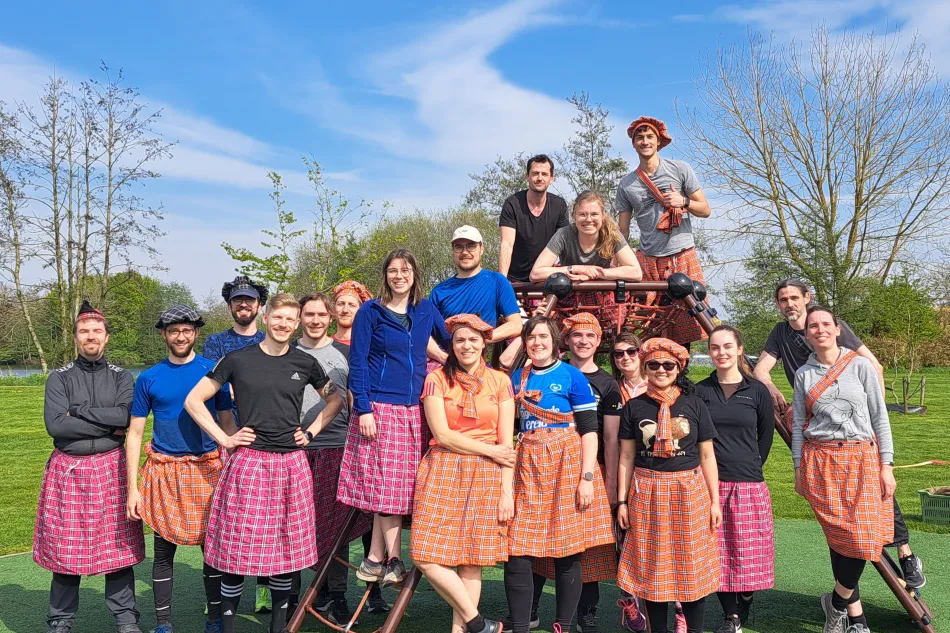
Teamstorm
It was that time of the year again. Our lab was unreachable for three days because of our teambuilding stay. Short recap: Wonderful food, home-made escape rooms, learning how to debug properly, an AI quiz, brainstorming about the future of SaeysLab and (fairly) competitive highland games. Conclusion: We are ready for the next year!
Saeyslab @ Scverse hackathon
Louise was present at the scverse hackathon in Heidelberg where interesting talks and a lot of coding happened. One of the end products is a package that brings the power of anndata objects to R.
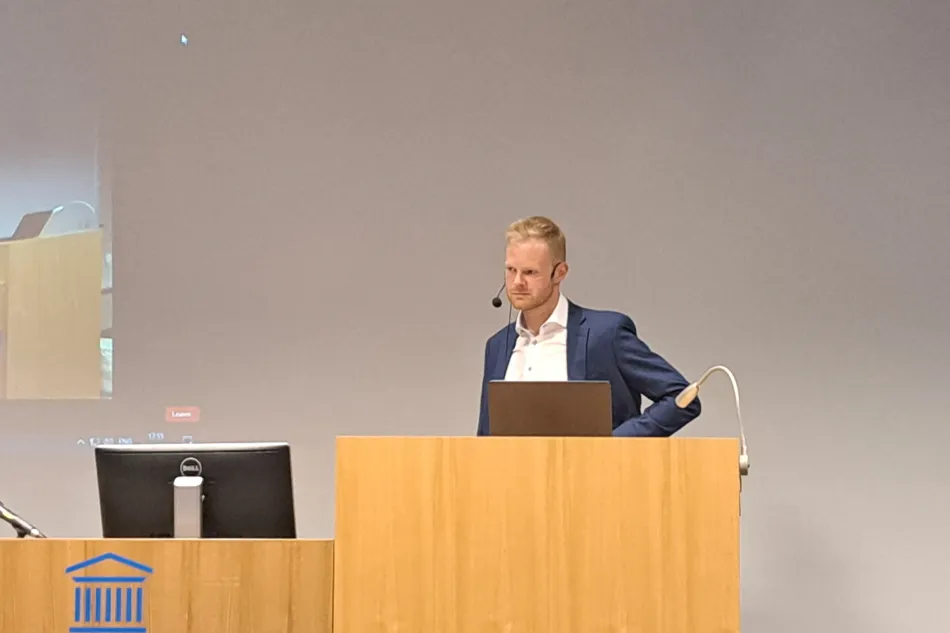
Robin got his PhD
We are proud to announce that Robin Browaeys obtained his PhD in Bioinformatics. Our founder of NicheNet successfully presented and defended his thesis today. Congrats dr. Browaeys!
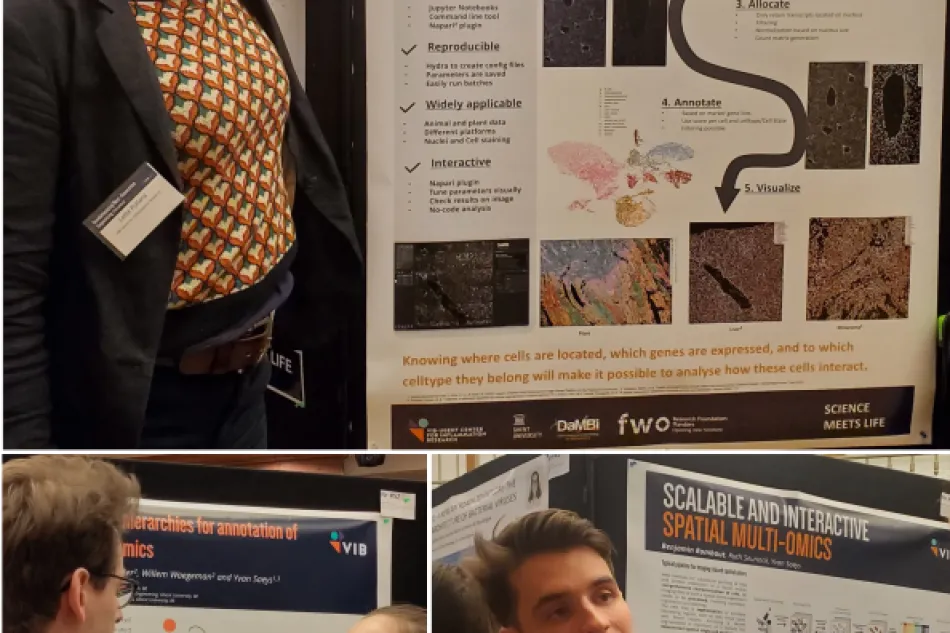
RNGS 2023
On the 5th edition of the Revolutionizing Next-Generation Sequencing of VIBLifeSciences, three SaeysLab members displayed their work through posters and soaked up the single-cell atmosphere.
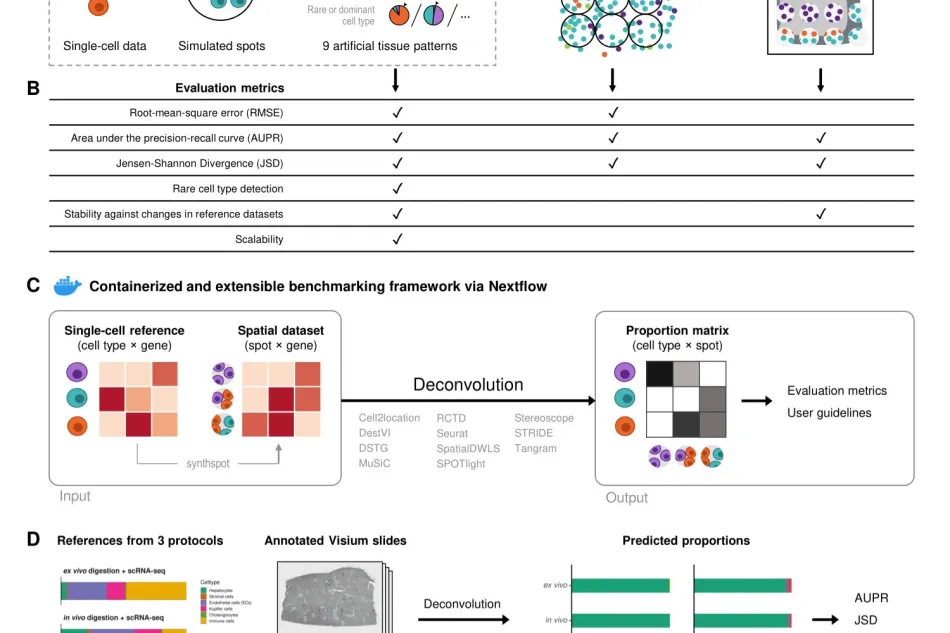
Spotless
The new benchmark Spotless on spatial deconvolution methods can now be found on BioRxiv! We compared 11 methods on synthetic and real spatial transcriptomics data.
Sarah, the award winner!
We are so proud of Sarah who has been awarded a young investigator proof-of-concept grant by Crig.
Let's look for measurable residual disease in acute myeloid leukemia with spectral flow cytometry!
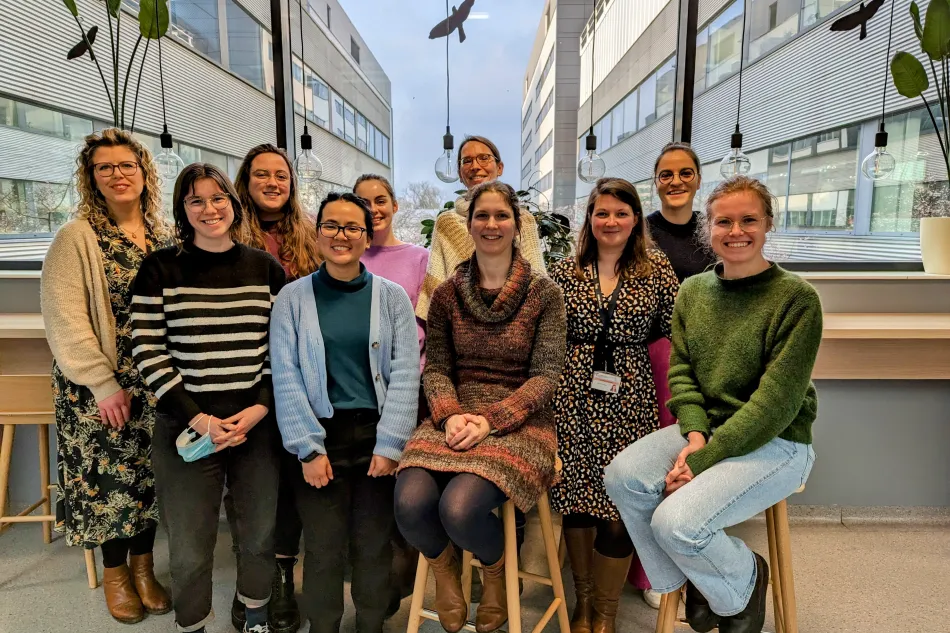
International women in science day
At SaeysLab we are proud of the women in our team tipping the scales in the gender balance and delivering outstanding scientific research!
SMPGD conference
Our very own post-doc Ruth, helped organizing the Statistical Methods for Post Genomic Data in Ghent. It was enlightening to soo all the work ranging from mathematical to applied statistics, but also new areas in high throughput biology that need new statistical developments.
Want even more news?